Under the sky of Mecca, a mother surrenders: Notes from a prayer guide

19 July 2026
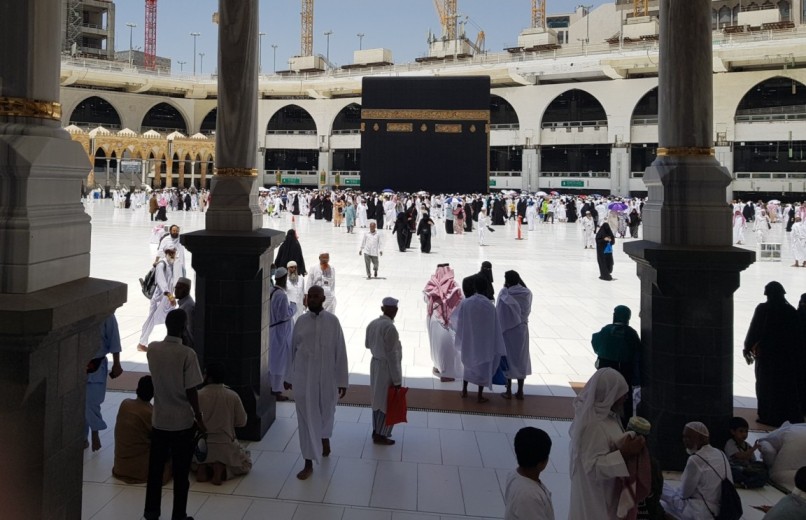
This photo, dated on July 18, 2021, shows the sacred Kaaba at the Masjidil Haram (Grand Mosque) in Mecca, Saudi Arabia. (Indonesia Window)
Jeddah-Mecca, mid-2017
…
People come to the Kaaba with lots of prayers.
Some ask for healing from illness, beg for sustenance, or beg for offspring, perhaps even hope for positions.
That afternoon I saw a woman with heavy things on her mind.
With hard mind, she thought her life would end.
…
The trip from Jeddah to Mecca was in deed quite short, about an hour.
However, it felt much longer because there was almost no conversation as the car we rode through the desert between the two cities.
The sun was still low when the car left Jeddah. Its golden light reflected off the windows, then fell on the mother's fingers, which never stopped clasping.
Beside her, a young man took several deep breaths, as if wanting to say something, but chose to keep it hidden beneath the expansive desert dunes beyond. Neither of them spoke.
Only the talbiyah continued to flow softly. Talbiyah is sentences or prayers recited commonly by the congregation in response to the call from Allah subhanahu wa ta'ala (ﷻ) to perform the pilgrimage of hajj or umrah (minor hajj).
"Labbaikallahumma labbaik... I fulfill Your call, O Allah
I joined in the recitation. In that car, the talbiyah felt different. It wasn't just a recitation accompanying the journey to the Holy Land.
It was like the last hold being held by three people, all trying to calm their hearts: the mother and the young man, and I, who had been tasked by the state to guide their little pilgrim.
I have been accompanying Indonesian citizens in Saudi Arabia for many years.
I have guided groups of officials, diplomats, businessmen, academics, and even community leaders on umrah. Usually, their journeys were filled with dynamic discussions of contemporary Islamic jurisprudence (fiqh).
This one was far… far different. The journey I took with the middle-aged mother and her son was filled with silence, but it left a deep impression on my memory.
The woman was an Indonesian migrant worker. She was facing a very difficult legal trial in Saudi Arabia: qishash (punishment for crimes based on the equality of the form of crime).
The young man beside her is her son—the only one of her own son who had come all the way from her homeland to accompany her on her pilgrimage.
I understood very well that the journey to Mecca that afternoon was not simply a journey to the Kaaba.
They were heading to the final place where they would place all their hopes.
The car continued to move.
Outside the window, the desert stretched endlessly. Inside the car, the silence felt more expansive than the desert itself.
I chose not to say much.
There is a sadness that deserves more companionship than being disturbed with words.
The talbiyyah filled the cabin again.
"Labbaikallahumma labbaik..."
Upon arriving at the Masjidil Haram (the Grand Mosque), our pace slowed. A sea of people of all shapes and colors flowed in all directions, but the woman walked slowly, as if each step carried an invisible burden.
Her son remained at her left. Without speaking much, he repeatedly checked that his mother was not separated by the flow of worshippers.
Then we arrived at the courtyard of the Kaaba.
Words cannot describe the expression on their faces at that moment.
The woman stopped walking. Her gaze was fixed on the Baitullah (the House of Allah).
For a moment, she simply stood still.
Her eyes began to water.
The child said nothing. He simply stood beside his mother, allowing the woman who had given birth to him to be absorbed in the encounter she had likely longed for.
I did not disturb the silence.
There are times when a guide's job is better not to give any direction, but rather to provide space and ease the hearts of those hit by life's burdens.
As we began our tawaf (circumambulation) of the Black Stone, I noticed that their lips barely moved.
Tawaf is the activity of circling the Kaaba seven rounds as one of the pillars of the hajj and umrah pilgrimages.
Not because they did not want to pray, but maybe because their hearts were too hard.
I then raised my prayer voice so that they could hear it amidst the thousands of people surrounding the Kaaba.
"If you don't know it by heart, just say it," I said quietly. From the first round to the seventh round, what I heard most often was not my own prayer, but a quiet answer from two trembling voices.
"Aameen... The voice was quiet.
However, every time it sounded, it felt like the entire burden of their lives was being lifted into the sky.
In several places that were believed to be magic points, I deliberately slowed down my steps.
My prayers are extended, not because worship has to be long, but because I feel they need more time to converse with their Almighty God ﷻ than with anyone else in this universe.
After praying two rak'ahs behind Maqam Ibrahim, we continued our journey towards Shafa (one of the historical hills in the Grand Mosque complex in Mecca)
Maqam Ibrahim is a historical stone in the Grand Mosque which was the place where Prophet Ibrahim alaihis salam (may peace be upon him) stood when he built the Kaaba with his son Prophet Ismail alaihis salam.
Along the sa'i between Shafa and Marwah, not much changed.
Sa'i is one of the pillars of the hajj and umrah pilgrimage in Islam which takes the form of a ritual of walking or jogging back and forth seven times between hills of Shafa and Marwah, in Mecca, Saudi Arabia.
Their steps remained slow.
Dhikrs (remembering Allah ﷻ) turned into prayers.
The woman slowly wiped away the tears streaming down her face.
Beside her, the son continued walking silently, occasionally glancing back to ensure her mother remained strong through each step.
There were no hugs, no tears.
There was a calmness, but that was what felt most thrilling.
After the tahallul was over, we raised our hands again.
Tahallul is the process of shaving or cutting off part of the head hair which marks the completion of the hajj or umrah pilgrimage
The sky over Mecca began to change color.
The orange hues darkened.
The afternoon breeze blew gently through the courtyard of the Grand Mosque.
We were praying longer than usual.
I no longer thought about the order of the prayers I usually recite to the congregation.
All that filled my heart at that moment was one simple hope: may Allah ﷻ give strength to a mother undergoing trials, strengthen the heart of the son who faithfully accompanies her, and reveal the best way out for both of them.
That day, I learned again that not everyone comes to the Baitullah (the House of Allah ﷻ) with a lot of hopes and dreams.
Some came with sufferings.
Some came with fears.
While others came simply seeking one thing that no one but Allah ﷻ can give forgiveness.
Under the sky of Mecca, in a prayer that I deliberately made longer than usual, I offered all my requests for forgiveness, fortitude, and a good future for the mother and her son.
End
Author: Daday Hidayat, Lc.
Bagikan

Komentar
Berita Terkait
COVID-19 – Indonesia kicks off mass vaccination for reporters, targeting 5,512 persons
Indonesia
•
25 Feb 2021
Rescue team finds 8 more bodies of Cianjur quake, bringing total to 318
Indonesia
•
26 Nov 2022
President says Indonesia ready to be a bridge for the world
Indonesia
•
15 Feb 2025
Perpetrators of the clash at Indonesia’s nickel company face strong measures
Indonesia
•
17 Jan 2023

Berita Terbaru
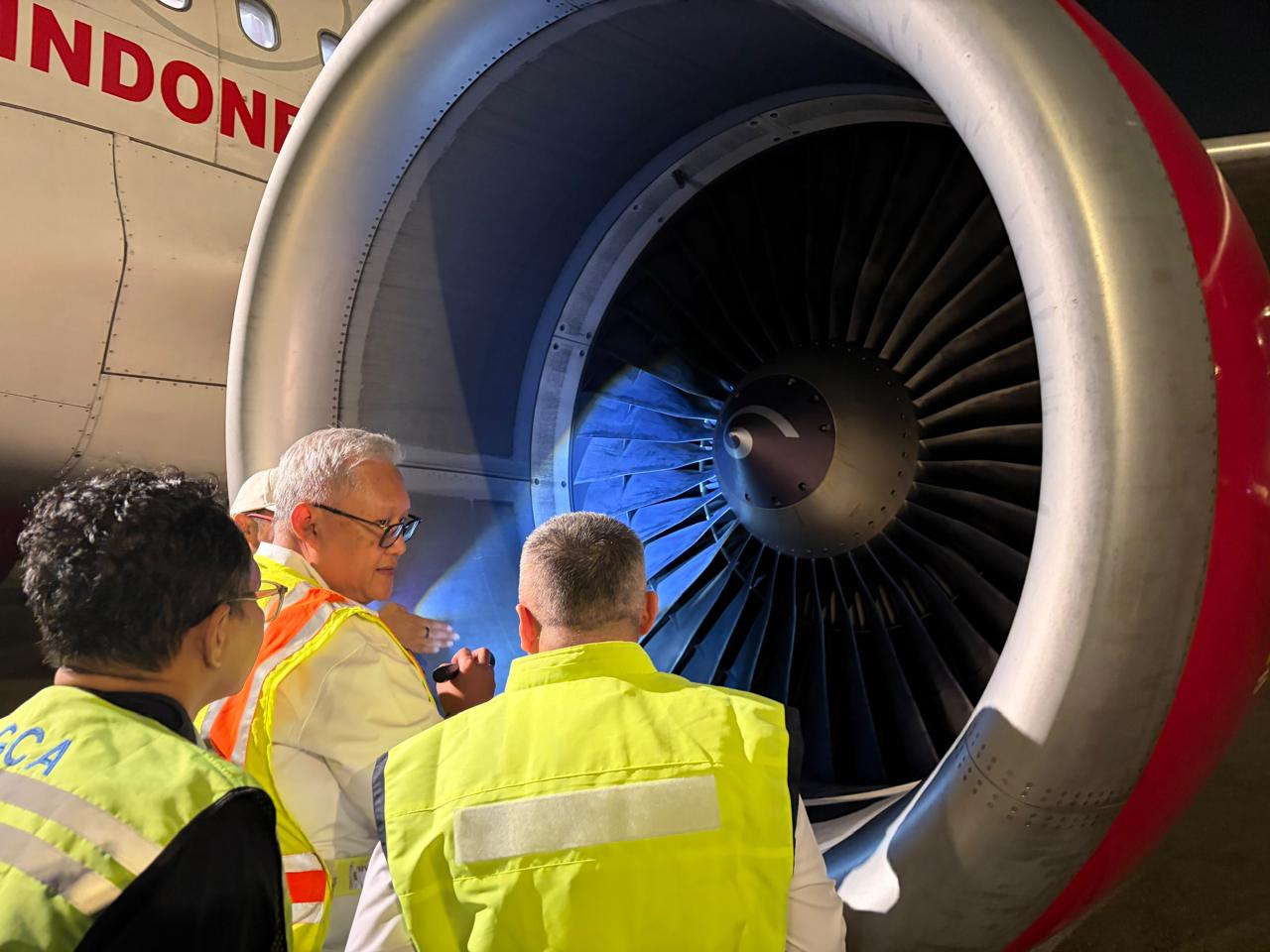
Minister: Airports affected by Mount Anak Krakatau volcanic ash reopen
Indonesia
•
08 Sep 2026
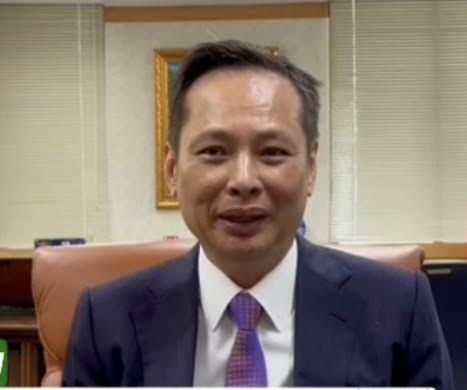
TETO: Sudut Pandang is one of important mass media in Indonesia
Indonesia
•
06 Sep 2026
Feature – Preserving 180-year-old legacy: UIN Ar-Raniry digitizes Quranic manuscript of Acehnese scholar
Indonesia
•
29 Aug 2026
Opinion – Prophet Muhammad ﷺ and journey toward literacy, ecological awareness
Indonesia
•
27 Aug 2026