Opini – Foreign Minister Tata and the Future of Multilateralism: Indonesia and the UN in a Changing World Order

24 October 2026
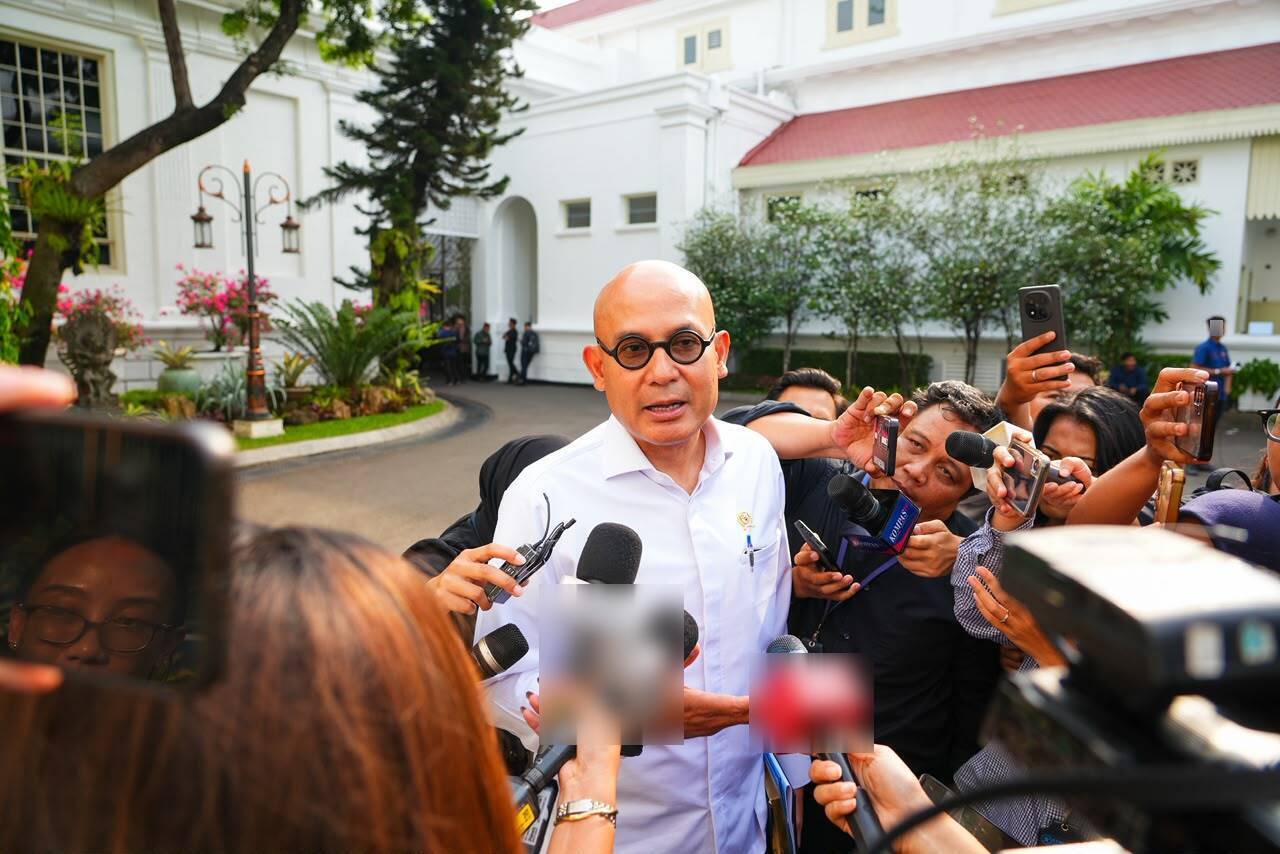
Indonesian Foreign Minister Arrmanatha Nasir gave a press statement at the Merdeka Palace, Jakarta, on Tuesday, October 20, 2026. (BPMI Setpres/Rusman)
The visit of United Nations Secretary-General Antonio Guterres to Jakarta on 19 October 2026 highlighted Indonesia’s longstanding commitment to multilateral cooperation, reaffirmed by Foreign Minister Arrmanatha Nasir, familiarly known as Tata, amid growing pressure on the international order.
Their meeting also provided a reminder that Indonesia and the United Nations (UN) share a close historical connection: both were born in 1945, at a time when the world was emerging from the devastation of the Second World War. Indonesia proclaimed its independence on 17 August 1945, while the UN came into existence on 24 October of the same year.
Like two old classmates, Indonesia and the UN have traveled different paths since 1945, but both emerged with hopes of a more peaceful world. Indonesia’s fight for independence was also a rejection of colonialism beyond its own borders. The Preamble to its Constitution states that colonialism must be abolished throughout the world and calls for a world order based on independence, lasting peace and social justice.
Indonesia took its case for independence to the international community and joined the UN in 1950. Since then, it has contributed to peacekeeping and the development of international law, and championed the participation of developing countries in global decision-making.
More than eight decades later, those principles face new tests. Geopolitical rivalries are intensifying, armed conflicts continue, climate change threatens livelihoods, and the rise of artificial intelligence is sparking misinformation and economic anxiety. All these pressures have renewed questions about the UN’s ability to respond effectively, prompting calls for reform.
The UN’s response to these challenges will depend in part on the willingness of its member states to work together. In this context, Tata brings years of experience in multilateral diplomacy to the job of foreign minister, having served as Indonesia’s Permanent Representative to the UN in New York before taking up his new role.
Foreign minister Tata's diplomacy and the need for UN reform
Tata’s career has taken him from negotiations on economic and development issues at Indonesia’s UN mission in New York (2008–2012) to serving as ambassador to France and, from 2021, as the country’s Permanent Representative to the UN. He has also served as a Foreign Ministry spokesperson and Indonesia’s representative to UNESCO.
The diplomatic tradition he represents has its roots in the 1955 Asian-African Conference in Bandung (West Java), where newly independent countries challenged colonialism and asserted their right to an equal voice in international affairs. The demand for a fairer international order remains highly relevant to debates over the UN today.
At the Foreign Policy Circle Talks in Jakarta on 19 October 2026, Tata argued that multilateralism remains essential, while reform of the UN and the wider multilateral system is inevitable. The UN Security Council is an obvious test. Its five permanent members retain veto powers, and its composition still reflects the power balance of 1945, despite major changes in the world economy and the growing influence of countries that remain underrepresented.
Representation is not the only problem. Disagreements among major powers have repeatedly hampered the Security Council’s response to conflicts. Expanding membership would make it more representative, but reform should also address its ability to act when international peace and security are at risk.
Guterres described Indonesia as a pillar of multilateralism and praised its role in building bridges between the Global North and South, and between East and West. With a strong foreign minister, Indonesia can seek to turn that diplomatic standing into support for workable reforms, while building agreement among countries with different interests and priorities.
Indonesia as a bridge-builder, peacemaker and norm-setter
Indonesia's participation in ASEAN, the G20, BRICS, the Organization of Islamic Cooperation, and other international forums creates opportunities for dialogue and cooperation across diverse interests.
Three roles are relevant to Indonesia's engagement with the UN: bridge-builder, peacemaker and norm-setter.
As a bridge-builder, Indonesia can help narrow differences between developed and developing countries and encourage talks where geopolitical competition hinders cooperation. For example, Indonesia’s 2022 G20 presidency demonstrated its ability to hold together countries divided by Russia’s invasion of Ukraine, resulting in the issuance of a joint declaration.
As a peacemaker, Indonesia contributes personnel to UN peacekeeping operations and supports diplomatic approaches to conflict resolution. On Palestine, it has consistently called for peace, humanitarian access to Gaza and a two-state solution, keeping Palestinian self-determination on the international agenda.
As a norm-setter, Indonesia draws on its experience in advancing the archipelagic-state principle, which became part of international maritime law under UNCLOS (United Nations Convention on the Law of the Sea). This history demonstrates that sustained diplomacy can help establish rules with consequences far beyond a single country's interests.
Indonesia’s international role does not depend on having all the answers at home. Like other countries, it faces difficult issues involving development, environmental protection and economic growth.
Those challenges have given Indonesia experience it can bring to international debates. Its diplomatic contribution lies in finding common ground with countries whose interests may differ from its own. That role is tested in areas such as climate change, development finance and emerging technologies.
Indonesia's bid for the UN Security Council, 2029–2030
Indonesia is seeking another two-year term on the UN Security Council in 2029–2030, having served four times before: 1973–1974, 1995–1996, 2007–2008 and 2019–2020.
If elected, Indonesia could use its experience in peacekeeping and dispute settlement to press for preventative diplomacy, stronger civilian protection and respect for international law. During the joint press statement with Guterres, Tata put the challenge succinctly: ‘The Security Council must be a room for solution, not a room for vetoes’.
The Security Council can seem ineffective when its five permanent members disagree, as repeated failures to resolve major conflicts have shown. Reform will require agreement among those powers and the wider UN membership. Tata’s experience at the UN gives him direct knowledge of how such negotiations work. If elected, Indonesia could press for change and help build broader support for reform.
Indonesia and the United Nations, the two ‘classmates’ born in 1945, still have much to accomplish together. For Tata, the task is to carry Indonesia’s long-standing commitment to an independent, rules-based international order into the negotiations that will determine how the United Nations serves its members in the years to come.
End
Author: Dian P. Havid (Doctoral Candidate in Law, Marseille, France)
Bagikan

Komentar
Berita Terkait

Minister Retno Marsudi inaugurates Indonesia House Amsterdam
Indonesia
•
22 Sep 2024

COVID-19 – Indonesia explores cooperation for vaccine development with Japan
Indonesia
•
11 Sep 2020
Indonesia gets additional hajj quota for 8,000 pilgrims
Indonesia
•
09 May 2023

22 die, 27 missing in Indonesia’s Semeru eruption
Indonesia
•
07 Dec 2021


Berita Terbaru
Badr MoU: Indonesia’s move to expand cooperation in defense industry with Türkiye, Qatar, Pakistan
Indonesia
•
22 Oct 2026
Muhammad used as target of mockery by U.S. president, Indonesia’s Jama’ah Muslimin issues strong protest
Indonesia
•
20 Oct 2026
Islamic Study – Allah has guaranteed rizq; Why do we still worry?
Indonesia
•
18 Oct 2026

Indonesian crew member causes Ethiopian Airlines cargo plane to turn back from Addis Ababa
Indonesia
•
13 Oct 2026