Opinion – Prophet Muhammad ﷺ and journey toward literacy, ecological awareness

27 August 2026
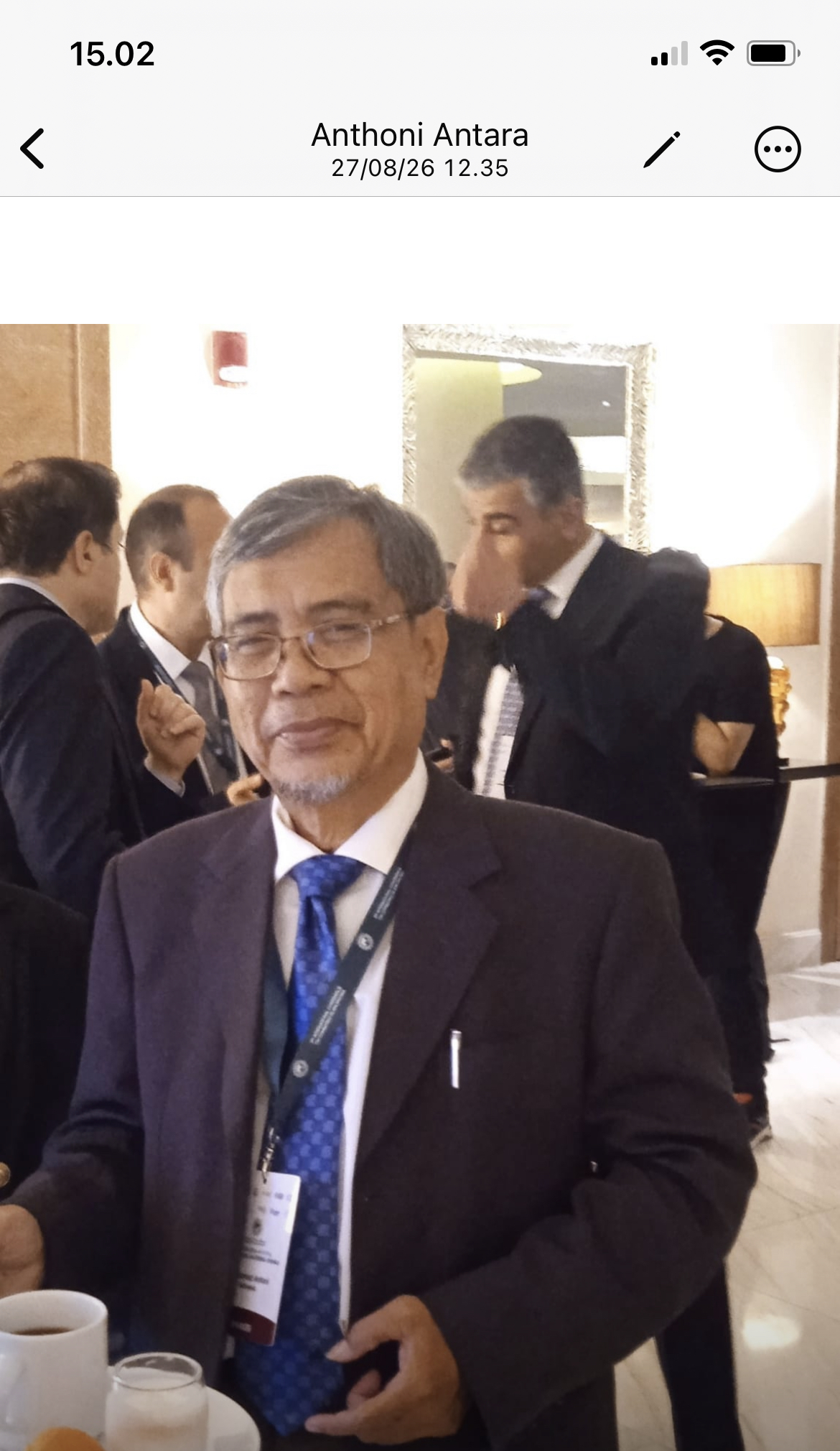
Muhammad Anthoni, a senior editor of Indonesia Window. (Photo: Special)
Literacy is no longer understood simply as the ability to read and write. Modern societies increasingly recognize different forms of literacy, including digital literacy, financial literacy, health literacy and environmental or ecological literacy.
Bogor, West Java (Indonesia Window) – When the first revelation came to Prophet Muhammad (peace be upon him/ﷺ), it began with a command that would shape not only the history of Islam but also humanity’s relationship with knowledge: ‘Read’.
The opening verses of Surah Al-‘Alaq (96:1–5), revealed through the Angel Gabriel in the Cave of Hira, placed learning and knowledge at the heart of the Prophet’s mission. Soon afterward, Surah Al-Muddaththir (74:1–2) called upon him to rise and warn his people.
The mission, however, was not an easy one.
From a culture of limited literacy to a culture of learning
Seventh-century Mecca was deeply rooted in polytheism and tribal traditions. Literacy was also limited. Historical accounts suggest that only a small number of people in Mecca were able to read and write.
Faced with a society that had limited access to formal education, Prophet Muhammad ﷺ began his mission gradually.
He first shared his message with his wife, family members, close friends and those around him. Early Muslims gathered at Dar al-Arqam, the home of Al-Arqam ibn Abi Al-Arqam, which became an important place for learning, worship and the development of the early Muslim community.
Education was not separated from the Prophet’s religious mission. Learning became one of the tools through which people were empowered to understand revelation and transform their lives.
This commitment to literacy became even more visible after the Battle of Badr. Among the prisoners of war were people who possessed valuable skills, including the ability to read and write.
Historical accounts describe how some prisoners were allowed to secure their freedom by teaching Muslim children to read and write.
It was a remarkable decision. At a time when literacy was scarce, knowledge itself became a form of contribution to society.
The Prophet’s approach also helped strengthen the institution of the ‘kuttab’, an elementary learning place where children could acquire basic reading and writing skills.
While Dar al-Arqam functioned primarily as a center for religious instruction and community development, the ‘kuttab’ focused more directly on basic literacy.
Together, these efforts reflected a broader principle: a society cannot progress without knowledge.
Literacy beyond reading and writing
Today, the meaning of literacy has expanded.
Literacy is no longer understood simply as the ability to read and write. Modern societies increasingly recognize different forms of literacy, including digital literacy, financial literacy, health literacy and environmental or ecological literacy.
Ecological literacy, often called ‘ecoliteracy’, refers to the ability to understand how natural systems function and how human activities affect the environment.
It encourages people to recognize that humans are not separate from nature but are part of interconnected ecological systems.
The concept gained prominence in modern environmental education through the work of educators and thinkers such as David W. Orr and Fritj of Capra in the 1990s.
At its heart is a simple but increasingly urgent idea: education should help people understand not only how to live well, but also how to live sustainably.
An ecologically literate society is therefore one that understands its dependence on healthy ecosystems and seeks to protect them. It connects education with sustainability, systems thinking and responsible citizenship.
For younger generations, this form of literacy is becoming particularly important. Climate change, biodiversity loss, habitat destruction and wildlife trafficking are no longer distant environmental issues. They are challenges that are expected to shape the world in which today's young people will live.
Connecting Faith, Knowledge and Conservation
This is where the Islamic emphasis on knowledge can offer a meaningful perspective on environmental education.
If the first revelation began with a command to read and learn, then the responsibility of education can extend beyond books and classrooms.
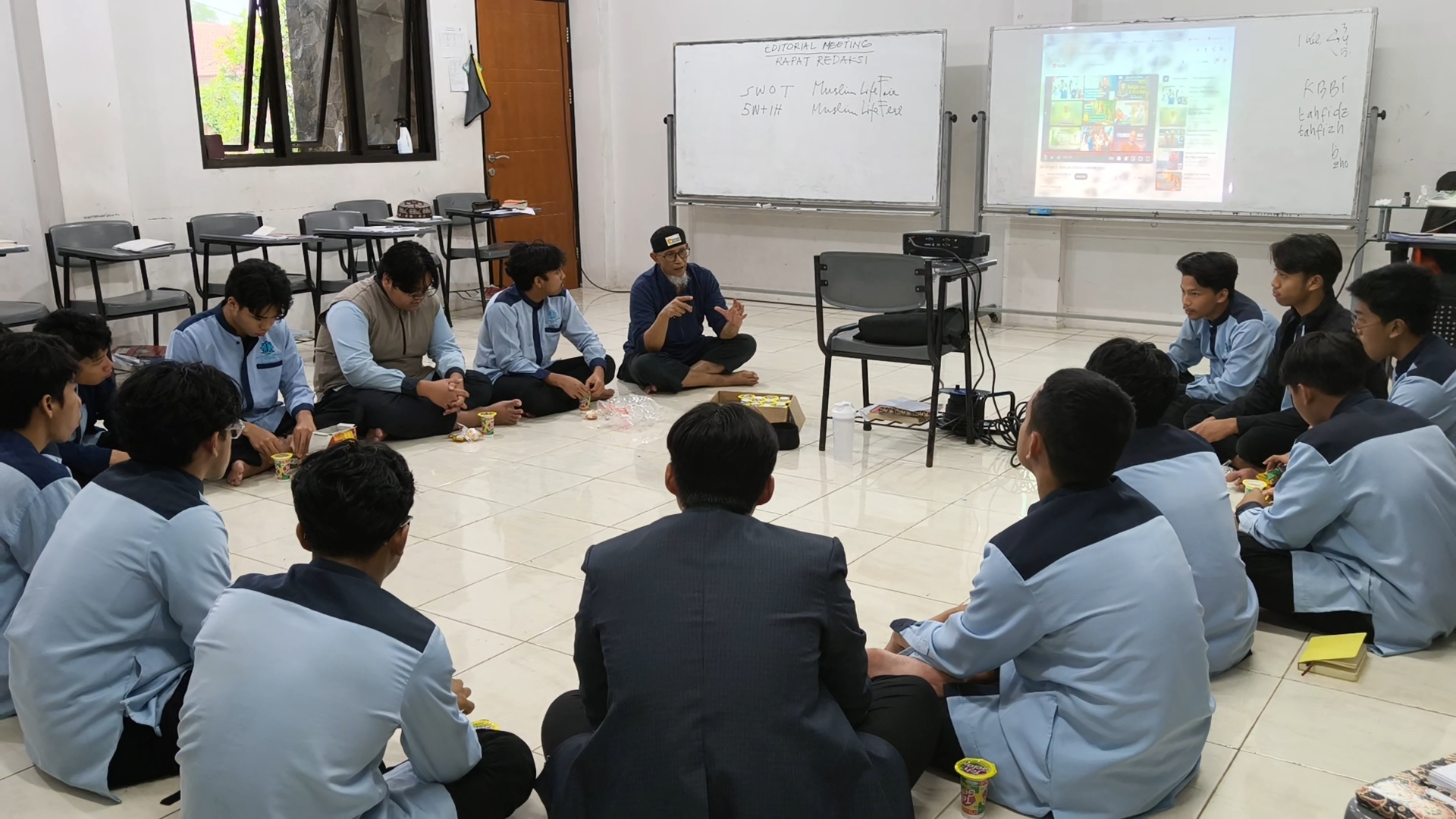
Learning can also mean understanding the world around us—including forests, oceans, animals and the complex ecosystems that sustain human life.
In Indonesia, efforts to strengthen public understanding of wildlife conservation provide an example of how education and communication can work together.
The Indonesian Wildlife Conservation Forum (known as its abbreviation FOKSI) serves as a communication channel for wildlife conservation issues in Indonesia and has collaborated with the Taman Safari Indonesia (TSI/Indonesia Safari Park) Group through the ‘Orientasi Wartawan Konservasi Satwa Liar’ (OWAKA/the Orientation of Wildlife Conservation Journalists), a wildlife conservation journalism orientation program.
The initiative highlights an important role for journalists: translating complex conservation issues into stories that ordinary people can understand and care about.
In the digital era, this responsibility is particularly significant because young audiences increasingly encounter information through online news platforms and social media.
Taman Safari Indonesia: Conservation Through Education
Taman Safari Indonesia has developed its conservation work around a combination of wildlife protection, education, research and tourism.
The organization currently operates conservation and tourism destinations in several locations across Indonesia, with thousands of animals representing hundreds of species.
Its activities include efforts to rescue, rehabilitate and, where appropriate, return wildlife to natural habitats.
The story began with the establishment of Taman Safari Bogor in Indonesia’s Cisarua area, Bogor District, West Java Province, in April 1986.
The organization later expanded with Taman Safari Indonesia Prigen in Pasuruan District, East Java Province, which opened in December 1997.
Its network has since grown to include destinations such as Taman Safari Bali, Funtastic Beach Safari in Batang (Central Java), Jakarta Aquarium & Safari, Solo Safari and newer developments including Marine Safari Bali, Varuna Bali and Enchanting Valley Bogor.
Beyond its conservation sites, Taman Safari Indonesia also manages tourism properties such as Royal Safari Garden, Safari Resort, Baobab Safari Resort and Mara River Safari Lodge.
Yet the significance of such institutions goes beyond the number of animals they care for or the number of visitors they attract. Their educational role may be just as important.
A child who sees a rare animal for the first time may remember that experience long after leaving the park. A young journalist who learns how wildlife conservation works may tell stories that reach thousands—or millions—of people online.
That is ecological literacy in practice: turning information into understanding, and understanding into responsibility.
The next generation of literacy
The connection between Prophet Muhammad’s emphasis on knowledge and today's environmental challenges offers a powerful lesson.
Education should not stop at teaching people how to read words. It should help them learn how to read the world.
We need young people who can read books, but also understand ecosystems. Young people who can navigate social media, but also distinguish reliable environmental information from misinformation. Young people who understand that wildlife is not merely something to photograph or admire, but part of a larger ecological system on which human life depends.
Early efforts Prophet Muhammad ﷺ to build a community of learners show the transformative power of knowledge. Centuries later, the same principle remains relevant: societies become stronger when knowledge is accessible, shared and put into practice.
In the 21st century, ecological literacy should become part of that mission, because protecting nature begins with understanding it, and understanding begins with learning to read—not only the page, but the world around us.
End
Author: Muhammad Anthoni, a senior editor of Indonesia Window
Bagikan

Komentar
Berita Terkait
Indonesia's digital economy in 2030 to reach 210-360 billion USD
Indonesia
•
01 Aug 2024
News Focus – Halal Fair 2023 explores Indonesia’s halal industry potentials at global level
Indonesia
•
08 Dec 2023
Indonesia-Brazil discuss economic cooperation enhancement in bilateral consultation forum
Indonesia
•
18 Dec 2020
COVID-19 – Indonesia prioritizes mitigation in 12 districts/cities
Indonesia
•
12 Oct 2020
Berita Terbaru
Opini – Foreign Minister Tata and the Future of Multilateralism: Indonesia and the UN in a Changing World Order
Indonesia
•
24 Oct 2026

Badr MoU: Indonesia’s move to expand cooperation in defense industry with Türkiye, Qatar, Pakistan
Indonesia
•
22 Oct 2026

Muhammad used as target of mockery by U.S. president, Indonesia’s Jama’ah Muslimin issues strong protest
Indonesia
•
20 Oct 2026
Islamic Study – Allah has guaranteed rizq; Why do we still worry?
Indonesia
•
18 Oct 2026