Islamic Study – Allah has guaranteed rizq; Why do we still worry?

18 October 2026
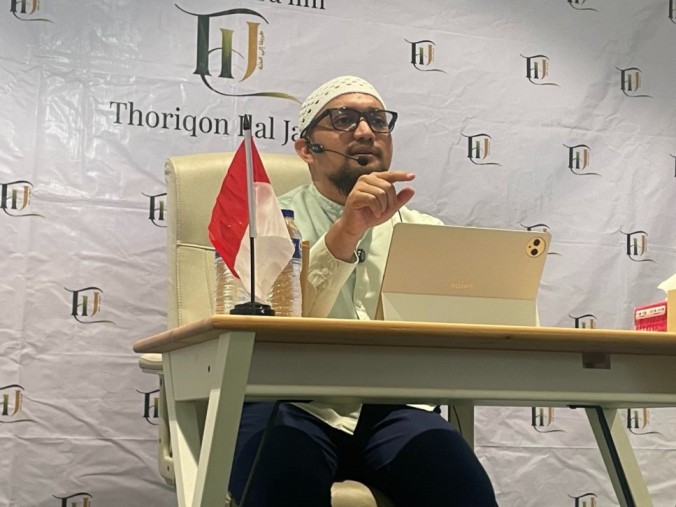
Dr. Abdullah Ahmad Zawawi, B.IL CIFP حَفِظَهُ اللهُ, when giving a scientific study about aqidah, sustenance and blessings at the Istiqomah Mosque, Indonesia’s Sentul City, Bogor District, West Java Province, on Saturday (October 17, 2026). (Indonesia Window/Ronald Rangkayo)
Allah Subhanahu Wa Ta'ala has guaranteed sustenance (rizq); however, humans are still required to work, but wealth is not the ultimate goal. Aqidah (Islamic creed) teaches individuals to seek a livelihood through righteous means, to be grateful for what is received, and to treat their wealth as a trust (amanah). A blessed provision is not necessarily the largest amount, but rather that which brings goodness to its possessors and those around them.
Bogor, West Java (Indonesia Window) – If sustenance (rizq) is already guaranteed by Allah ‘Subhanahu Wa Ta'ala (ﷻ), why do humans still have to work?
Such a question may sound simple, yet the answer determines how one pursues a livelihood—whether with peace of mind or deep anxiety, and whether through lawful (halal) means or by succumbing to the temptation of taking risky shortcuts.
That was the question leading Ustadz Dr. Abdullah Ahmad Zawawi, B.IL CIFP— حَفِظَهُ اللهُ(may Allah protect him)—to explore the relationship between aqidah (Islamic creed) and sustenance during his lecture at the Istiqomah Mosque, at IKEA Sentul City, Indonesia’s Bogor District, West Java Province, on Saturday (October 17).
Dr. Abdullah Zawawi invited the congregation to reconsider how they measure sustenance. If it is understood solely as money or material wealth, many other blessings go unnoticed—such as good health, a righteous family, beneficial knowledge, free time filled with positive activities, and opportunities to engage in acts of worship.
From there, the discussion delved into a deeper foundation: faith in Allah ﷻ.
According to Dr. Abdullah, aqidah is not merely a matter of internal belief; it shapes one’s behavior—influencing how a person works, treats others, and utilizes their wealth.
In economic matters, the conviction that Allah ﷻ is the ultimate Provider of sustenance should foster humbleness. While humans may work and serve as intermediaries through which provision reaches others, they are not the absolute owners of anyone else’s—or any other creature’s—livelihood.
Wealth is not something that can be owned forever. One may accumulate it over many years, yet it cannot be taken into the grave upon death.
During one’s lifetime, wealth is a trust—an amanah—that must be managed correctly, which includes fulfilling the obligation of zakat (obligatory almsgiving) and ensuring that the rights of those entitled to a share are met.
As Dr. Abdullah explains, zakat is not merely a reduction of one’s savings; rather, it is a recognition that a portion of one’s wealth is intended for others.
This perspective shifts the meaning of ‘enough’. A modest provision can feel sufficient and bring peace of mind, while abundant wealth can serve as a means to provide broader benefits.
True barakah (blessing) is not defined by an increase in quantity, but by the enduring goodness inherent in what one possesses.
Nevertheless, the belief that one’s provision comes from Allah ﷻ is no excuse for idleness. Human beings are still commanded to work, learn, and seek out opportunities.
Ikhtiar (earnest effort) and tawakal (reliance on Allah) go in line: one fulfills their own responsibilities while remaining mindful that the final outcome rests within the decree of Allah ﷻ.
This conviction also prevents an individual from resorting to any means necessary to acquire wealth. Anxiety regarding one’s needs can tempt a person to pursue results through risky shortcuts.
Dr. Abdullah reminds us that one’s provision must be sought in ways that are blessed by or pleasing to Allah ﷻ.
The sheer amount of income is not the sole measure of success; the methods used to earn it—and how that wealth is subsequently utilized—determine its true value.
In navigating life, every person should accept their own portion without comparing themselves to others.
Ridho (contentment with Allah’s decree) and qana’ah (being satisfied with what one has) do not imply giving up or ceasing to strive. Instead, they enable a person to appreciate what they possess, continue working diligently, and prevent envy from taking root in the heart.
Practices such as istighfar (seeking forgiveness), infaq (spending for the sake of Allah), taqwa (piety/God-consciousness), and prayer are also discussed as catalysts for barakah. Infaq, for instance, may appear to diminish one’s wealth in purely mathematical terms, yet it carries a deeper, spiritual significance.
However, a Muslim gives because of Allah ﷻ, not making alms as a transaction to get rich quickly. The goodness born from it can return in various forms.
In the end, the question of guaranteed sustenance brings the jamaah (congregation) to a more complete understanding: work is still necessary, but wealth is not the final goal.
Aqidah teaches people to earn a living in the right way, be grateful for what they receive, and use their wealth as an amanah (trust).
Blessings are not just those that are abundant, but those that bring goodness to the owner and the people around him.
Reporting by Indonesia Window
Bagikan

Komentar
Berita Terkait

Indonesian, French presidents discuss main weapon system in Japan
Indonesia
•
21 May 2023

Indonesia, Philippines begin negotiations on continental shelf boundaries
Indonesia
•
04 Nov 2021
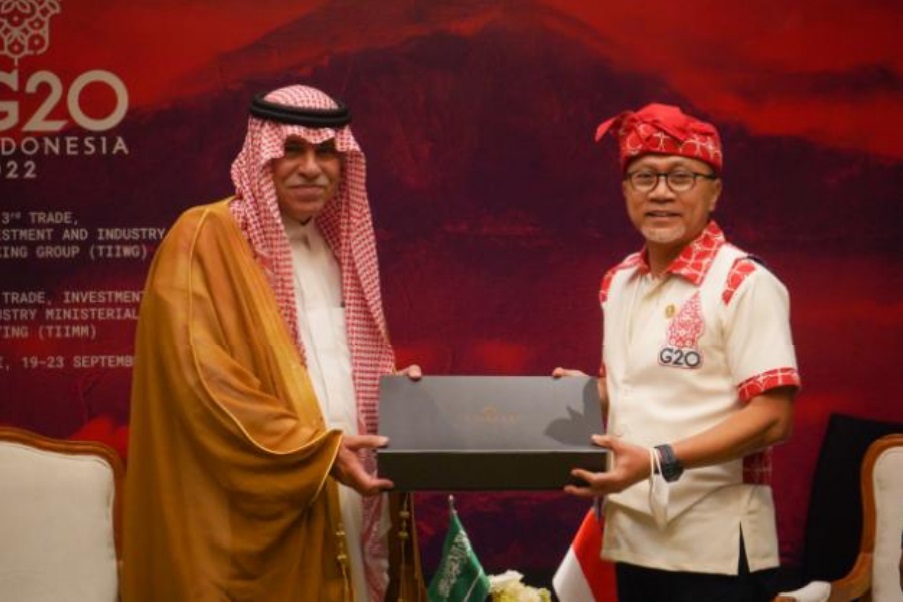
Indonesia encourages start of comprehensive economic negotiations with Saudi Arabia
Indonesia
•
22 Sep 2022

Indonesia passes UNSC Resolution on Afghanistan
Indonesia
•
18 Sep 2019

Berita Terbaru

Indonesian crew member causes Ethiopian Airlines cargo plane to turn back from Addis Ababa
Indonesia
•
13 Oct 2026
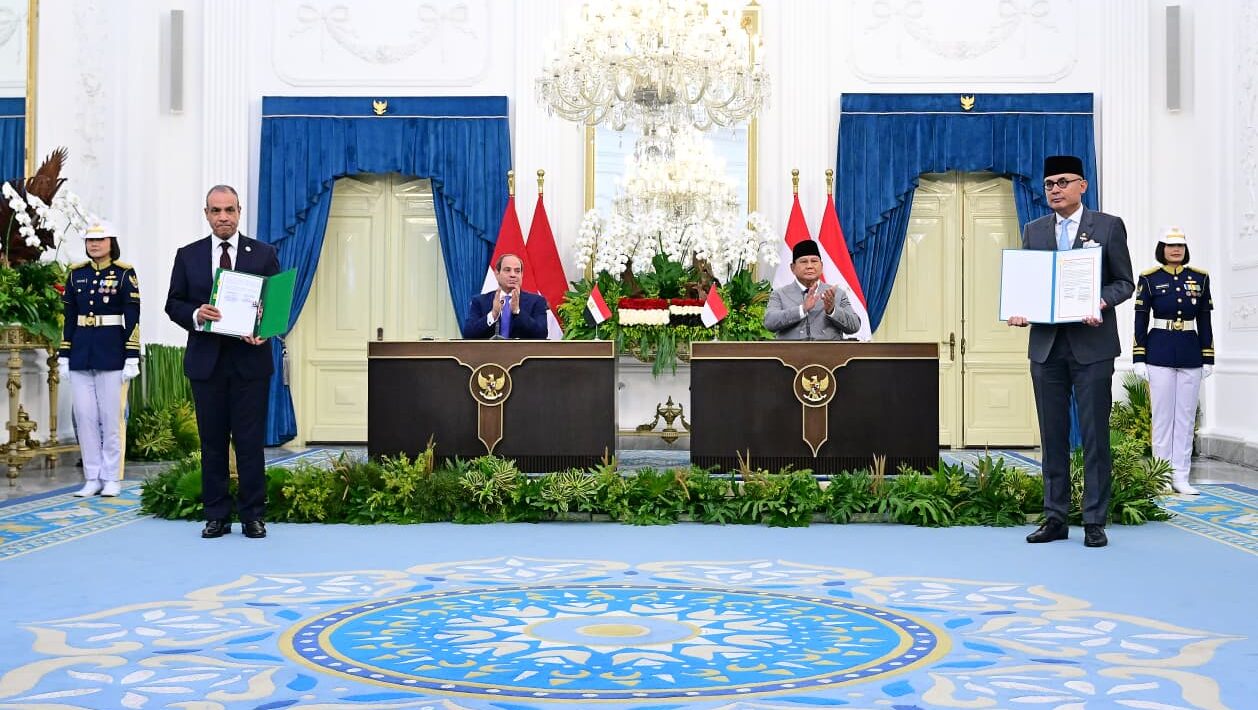
Indonesia, Egypt reach four cooperation agreements
Indonesia
•
12 Oct 2026
Indonesia's maiden EV battery export shows concrete proof of downstreaming strategy
Indonesia
•
11 Oct 2026
Feature - Pangrango Ancient Crater Expedition reveals biodiversity and geological richness at altitudes exceeding 2,000 meters
Indonesia
•
11 Oct 2026