Indonesia’s professor: ‘Dhikr’ in Islam not merely verbal utterance, but matter of awareness and conduct

14 September 2026
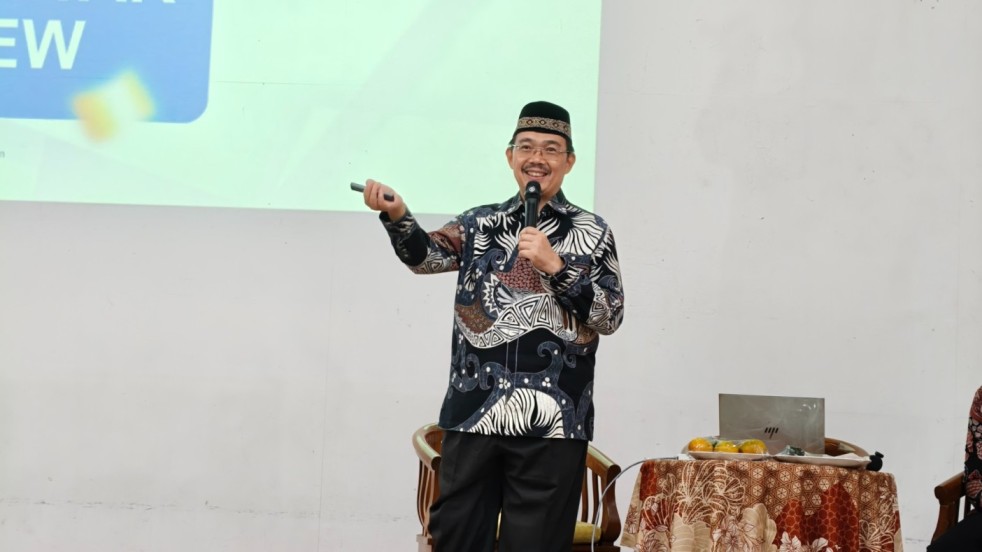
Tazkia University Rector Prof. Dr. Muhammad Syafi’i Antonio, Lc, M.Ec, at the Prophetic Leadership and Management Wisdom (ProLM) seminar in Indonesia’s Bogor District, West Java Province, on Sunday (September 13, 2026). (Indonesia Window/Ronald Rangkayo)
The ‘dhikr’ (remembering Allah/God repeatedly) is often understood as a mere verbal recitation, whereas it actually encompasses several levels—ranging from utterance, thought, mindfulness to action.
Bogor, West Java (Indonesia Window) – In the study of modern psychospirituality, dhikr (remembering Allah/God repeatedly) in Islam is viewed not merely as the activity of reciting specific phrases, but as a process of cultivating awareness of the presence of Allah Subhanahu wa Ta'ala (ﷻ) in daily life.
The concept bears a resemblance to the idea of mindfulness; however, from an Islamic perspective, this awareness is directed toward the relationship between the human being and Allah ﷻ, the Rector of Tazkia University, Prof. Dr. Muhammad Syafi’i Antonio, Lc, M.Ec, said during a seminar on ‘Prophetic Leadership and Management Wisdom’ (ProLM) in Indonesia’s Bogor District, West Java Province, on Sunday (Sept. 13).
The seminar was attended by, among others, the Chairman of the Garda Mualaf Indonesia Foundation, Koh Dondy Tan; the Chairman of the Tazkia Foundation, Mukhlis Yusuf; members of the Tazkia family; foundation and rectorate officials; and representatives from all Tazkia units.
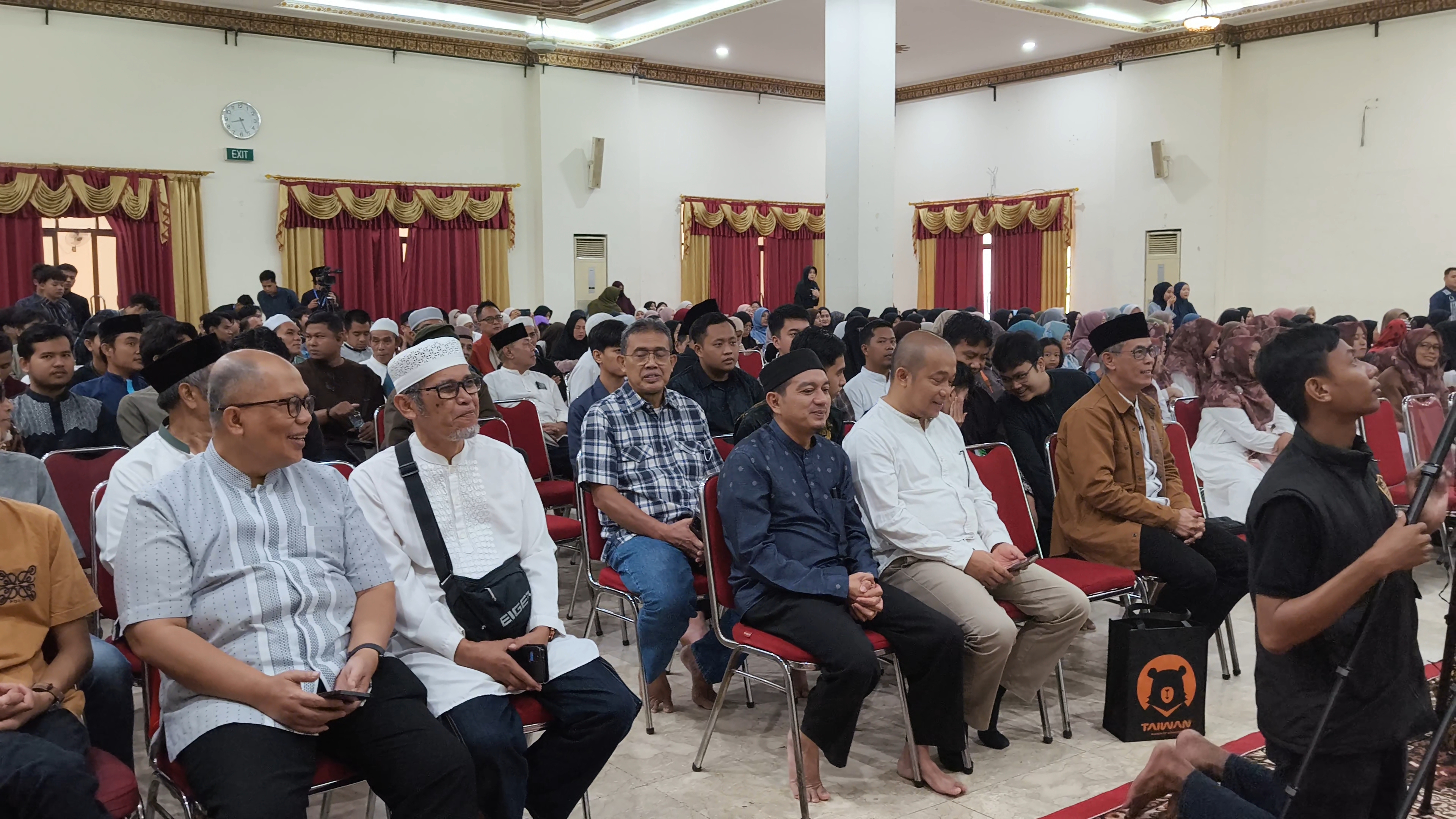
According to Prof. Syafi’i Antonio, the ‘dhikr’ is often understood as a mere verbal recitation, whereas it actually encompasses several levels—ranging from utterance, thought, mindfulness to action.
Prof. Syafi’i Antonio explained that there are four levels of dhikr: the first is verbal dhikr —remembering Allah ﷻ through utterance.
“The first level is lisani dzikr —remembrance performed through utterance; an example is reciting: ‘Subhanallah, walhamdulillah, wa la ilaha illallah, Allahu akbar, la haula wa la quwwata illa billahil ‘aliyyil ‘azhim,’” he explained, adding, however, that remembrance does not stop at mere utterance.
The second level is fikri zikr—remembrance in mind—where a person does not merely recite the words of remembrance but also reflects on them and connects them to various phenomena of life, he noted.
“For instance, when reciting ‘Subhanallah,’ one might contemplate the greatness of Allah ﷻ through various natural events, such as environmental degradation, the immense power of tsunami waves, or volcanic phenomena,” he stated.
Prof. Syafi Antonio further explained that at this stage, remembrance enters the realm of thought, knowledge, and the process of contemplating Allah ﷻ’s creation.
He pointed out the concept is linked to Surah Ali Imran, verse 191, which describes those who remember Allah ﷻ while standing, sitting, or lying down, while simultaneously reflecting on the creation of the universe including the earth.
Thus, he continued, dhikr becomes not only a verbal activity but also a catalyst for humans to reflect on the complexity of the universe and the mechanisms of creation.
The next level is qolbi dzikr—remembrance of the heart—where the meaning of the remembrance has penetrated and been deeply internalized by the heart, he said, explaining that one does not merely say ‘Subhanallah’ but also deeply senses the greatness and holiness of Allah ﷻ over all His creation.
“At this stage, dhikr transforms from mere utterance and thought into an inner experience. Humans experience a stronger spiritual connection with Allah ﷻ," he added.
The fourth level is arkani dhikr, which relates to a person's entire body and behavior, he said, noting that dhikr is considered incomplete if one's words do not align with one's actions.
“For instance, a person might recite istighfar (seeking forgiveness) yet still arrive late to work, fail to properly fulfill their duties, or continue to gossip about others," he stated.
The same applies to someone who prays to be spared from the hellfire but frequents forbidden places, uses their eyes to look at inappropriate things, uses their tongue to gossip, or consumes forbidden (haram) food, he added.
Thus, arkani dhikr emphasizes that spiritual awareness should be manifested through one's entire body and behavior, he said.
Reporting by Indonesia Window
Bagikan

Komentar
Berita Terkait

COVID-19 – Nearly 10.5 million Indonesians receive second doses of vaccine
Indonesia
•
28 May 2021
Indonesia highlights carbon emission mitigations of G20 countries
Indonesia
•
28 Sep 2020
Indonesia offers disaster resilience concepts of at global platform 2022 forum
Indonesia
•
25 May 2022
Indonesia, Guinea sign Letter of Intent on transportation sector
Indonesia
•
28 Jan 2023


Berita Terbaru
Suahasil Nazara Indonesia’s new finance minister, replacing Purbaya
Indonesia
•
14 Sep 2026

Minister: Airports affected by Mount Anak Krakatau volcanic ash reopen
Indonesia
•
08 Sep 2026

TETO: Sudut Pandang is one of important mass media in Indonesia
Indonesia
•
06 Sep 2026
Feature – Preserving 180-year-old legacy: UIN Ar-Raniry digitizes Quranic manuscript of Acehnese scholar
Indonesia
•
29 Aug 2026