Opinion – Indonesia's Golden Generation 2045: Turning demographic dividend into human capital

17 August 2026
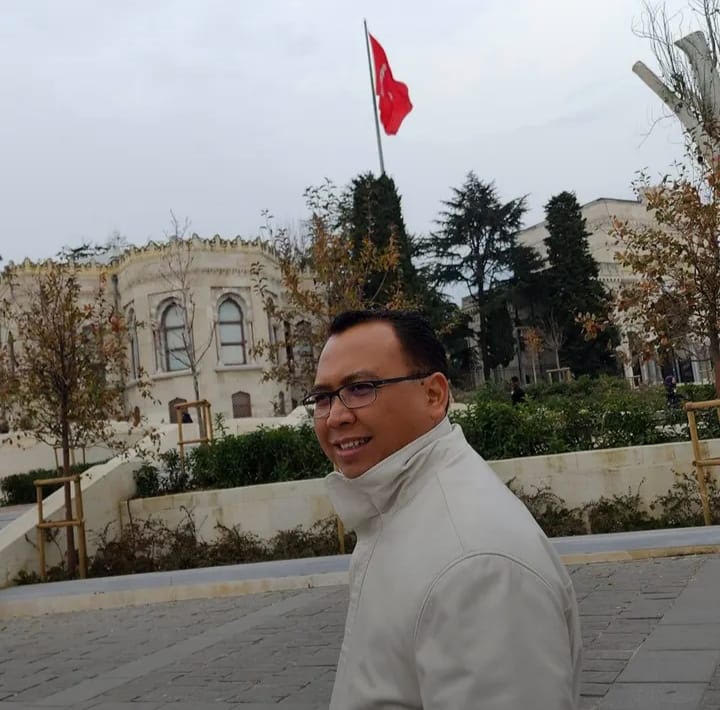
Muhammad Shodiq is Head of Talent Factory & Learning Capability Development at CIMB Niaga. The views expressed are solely those of the author and do not necessarily reflect those of his employer. (Photo: Special)
With one of the world's largest demographic dividends, Indonesia has an unprecedented opportunity to transform its young population into a globally competitive workforce.
Jakarta (Indonesia Window) – Indonesia stands at a defining moment in its journey toward its centennial in 2045.
The country's greatest strategic advantage is not its natural resources, but its people.
With one of the world's largest demographic dividends, Indonesia has an unprecedented opportunity to transform its young population into a globally competitive workforce.
Yet this opportunity is not guaranteed. Without bold investments in education, skills, and lifelong learning, today's demographic dividend could become tomorrow's demographic burden.
According to Statistics Indonesia (BPS), as of February 2026 Indonesia had 219.54 million people of working age. Of these, 154.91 million were in the labor force, while 147.57 million were employed.
Nevertheless, 7.24 million people remained unemployed. Although the open unemployment rate declined to 4.68 percent from 5.83 percent four years earlier, the real challenge extends beyond creating jobs.
It lies in creating quality jobs that foster productivity, innovation, and sustainable economic growth.
The composition of Indonesia's workforce illustrates this challenge. More than one-third of workers have only completed primary education or less, while diploma holders represent just over two percent of the workforce and university graduates account for only around eleven percent.
This educational profile reflects a labor market still dominated by basic skills, even as the future economy increasingly rewards digital literacy, analytical thinking, critical reasoning, creativity, communication, and complex problem-solving.
The rapid advancement of artificial intelligence (AI) further intensifies this challenge. AI is automating routine tasks, streamlining business processes, and transforming how organizations make decisions.
At the same time, it is increasing demand for distinctly human capabilities that machines cannot easily replicate—judgment, empathy, ethical decision-making, leadership, creativity, and adaptability.
Success in the AI era would depend less on what individuals already know than on how quickly they can acquire new knowledge, unlearn outdated practices, and continuously reskill themselves.
This reality calls for a fundamental transformation of Indonesia's education system. Schools and universities have to move beyond producing graduates with academic credentials alone.
They should become ecosystems that nurture competencies relevant to a rapidly evolving economy. Curricula need stronger alignment with industry needs, greater emphasis on project-based and experiential learning, broader integration of digital technologies, and expanded opportunities for internships, apprenticeships, and industry-recognized certifications.
Learning should not end at graduation. In an era defined by technological disruption, lifelong learning should become a national culture rather than an individual choice.
Continuous upskilling and reskilling are no longer optional—they are essential for maintaining employability and national competitiveness.
The private sector also has a critical role to play. Companies cannot simply wait for educational institutions to produce job-ready graduates.
Businesses should actively co-create talent pipelines by investing in workplace learning, providing high-quality internship programs, supporting professional development, and collaborating closely with schools and universities.
Likewise, government policies should strengthen labor market intelligence, expand access to vocational education, and ensure that opportunities for skills development reach rural communities and underserved regions, not only major urban centers.
Equally important is addressing inequality in access to opportunity. Human capital development cannot succeed if millions of young Indonesians continue to face unequal access to quality education, reliable internet connectivity, and professional training.
Indonesia's Golden Generation
Inclusive development is therefore not merely a social imperative—it is an economic necessity. Indonesia's Golden Generation would only emerge if every young citizen, regardless of geography or socioeconomic background, has the opportunity to realize their full potential.
Ultimately, Indonesia's Golden Generation 2045 is more than a national aspiration; it is a test of strategic leadership and collective commitment.
The critical question is not whether Indonesia has enough young people, but whether it can equip them with the capabilities required to thrive in a knowledge-driven, AI-enabled global economy.
If Indonesia truly seeks to become a developed and globally competitive nation by 2045, its greatest investment today should not be in slogans or infrastructure alone, but in building resilient, adaptable, and future-ready people.
Human capital—not demographics alone—would determine whether Indonesia's golden opportunity becomes a golden reality.
End
Author: Muhammad Shodiq is Head of Talent Factory & Learning Capability Development at CIMB Niaga. The views expressed are solely those of the author and do not necessarily reflect those of his employer.
Bagikan

Komentar
Berita Terkait

COVID-19 – Indonesia receives health assistance from Turkey
Indonesia
•
08 Aug 2021
Mosques expected to be favorite places for young people
Indonesia
•
03 Aug 2026
Indonesia, Egypt’s Al Azhar University agree on equalization system for students
Indonesia
•
22 Jun 2022
Indonesian Islamic school Insantama has excellent leadership program
Indonesia
•
25 Feb 2024


Berita Terbaru

Badr MoU: Indonesia’s move to expand cooperation in defense industry with Türkiye, Qatar, Pakistan
Indonesia
•
22 Oct 2026

Muhammad used as target of mockery by U.S. president, Indonesia’s Jama’ah Muslimin issues strong protest
Indonesia
•
20 Oct 2026
Islamic Study – Allah has guaranteed rizq; Why do we still worry?
Indonesia
•
18 Oct 2026

Indonesian crew member causes Ethiopian Airlines cargo plane to turn back from Addis Ababa
Indonesia
•
13 Oct 2026