Feature – Indonesian experts proudly involved in Taiwan’s semiconductor industry

19 November 2026
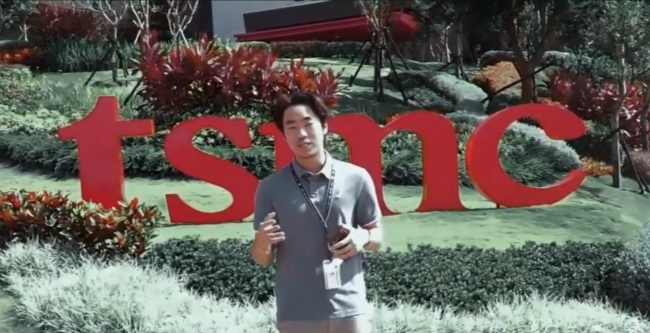
Owen Setiawan, an Indonesian citizen who works at the global semiconductor giant TSMC in Taiwan (Photo: Personal collection)
Undeniably, Taiwan currently serves as a pivotal hub in the global semiconductor supply chain.
According to the International Trade Administration, Taiwan accounts for over 60 percent of the global semiconductor foundry industry’s revenue and more than 90 percent of the production of advanced chips.
In this context, Taiwan’s President Lai Ching-te has stated that as global demand for artificial intelligence (AI) grows, the world will become increasingly reliant on Taiwan for its comprehensive semiconductor capabilities and trusted supply chain.
As reported by Taiwan’s national news agency, the Central News Agency (CNA), the president remarked during an event at the American semiconductor firm Micron Technology Inc.—held in Taichung, Taiwan, on October 15, 2024—that the more the world requires AI, the more it needs Taiwan.
The president further emphasized that Taiwan’s dominance in the semiconductor industry carries significant geopolitical implications, placing the island at the center of global technological and security competition—most notably between the United States and China.
Semiconductors are essential components in a wide array of high-tech products, ranging from smartphones and electric vehicles (EVs) to aircraft and defense systems.
Companies operating within the semiconductor sector design and manufacture the microchips that serve as the core components for various modern electronic devices.
This comprehensive industrial ecosystem, bolstered by mature and highly experienced manufacturing firms, has established Taiwan as a central hub for global chip production.
Experts from Indonesia
An intriguing question arises: are there any Indonesians working in Taiwan’s semiconductor industry? As it turns out, several Indonesian citizens—all graduates of Taiwanese universities—are indeed active within this high-tech sector.
Take, for instance, Owen Setiawan and Hans Juliano—two individuals from Indonesia’s Surabaya City, East Java Province, who now work at TSMC and Micron Technology, respectively, following the completion of their studies in Taiwan. They shared their experiences in a recent written interview, which is detailed below.
“My name is Owen Setiawan, 27, from Surabaya. I first arrived in Taiwan in 2019 to complete the second half of my undergraduate studies. At the time, I was pursuing a bachelor’s degree at Widya Mandala Catholic University Surabaya and had the opportunity to participate in a "double degree" program with the National Taiwan University of Science and Technology (NTUST)—spending two years in Surabaya and two years in Taiwan,” he noted.
Having experienced both the academic and professional landscapes in Taiwan, Owen realized that education is highly valued there. For example, those who hold a master’s degree typically command a higher professional rank and salary than those with only a bachelor’s degree.
Even if bachelor’s degree holders were to work for two years—the typical duration of a master’s program—their professional rank would likely still remain lower than that of someone with a master’s degree. Consequently, Owen decided to pursue further studies at the same institution, NTUST.
Ultimately, in 2024—by the grace of God Almighty—Owen completed his doctoral studies at the age of 25, achieving a GPA of 4.13 out of 4.3.
“With the support and guidance of my educators and colleagues, I contributed to the publication of over 20 research papers in Q1-indexed journals (which can be found on Google Scholar under the name ‘Owen Setiawan’), secured several scholarships, and obtained a Taiwanese patent,” he said.
Aware that the job market in Taiwan is highly competitive, he began submitting applications to various companies at least six months before my graduation.
“While I certainly faced some rejections and instances where I received no response, I persisted by sending out my CV for numerous positions across a wide range of companies. I am grateful to have been working at TSMC for two years now as a staff member in Advanced Packaging Research and Development (R&D),” he said.
TSMC serves as a manufacturing hub for computer chips used all over the world. According to a Google AI overview, TSMC’s clients include Apple, Nvidia, AMD, and many others.
“I take pride in being one of the Indonesians working here. I have gained a wealth of knowledge, covering areas such as chip manufacturing processes, product development, and collaboration with third parties,” Owen said.
On the other hand, working in such a fast-paced, high-pressure environment can be exhausting. However, this has not hindered Owen’s ability to perform well, as the company treats its employees very well—including through the incentives provided.
“My advice to students living abroad who are currently facing challenges is to stay motivated and remain actively involved in positive activities. It would be even better if students could participate in research or projects led by their academic supervisors,” he said.
If there are no opportunities available at the moment, we must take the initiative. We can be proactive by offering our help, which will add value to our profile when we eventually look for a job.
Meanwhile, learning the local language and adapting to local customs are essential steps toward being better accepted by those around us.
"I am grateful to be working in the semiconductor industry in Taiwan. I hope my experience serves as an example that the younger generation of Indonesia also has the opportunity to learn and build a career in a global industry. It doesn’t always have to start with something grand; what matters is having the courage to try, a commitment to continuous learning, and the development of skills you can be proud of," Owen Setiawan said.
Another native of Surabaya, Hans Juliano, sharesd, "I initially came to Taiwan to pursue a master’s degree in Electrical Engineering and Computer Science at National Yang Ming Chiao Tung University (NYCU)".
"From the start, one of the reasons I chose Taiwan was its highly developed semiconductor industry. I believed that studying and working in Taiwan would be an excellent opportunity to further develop my skills," he said.
After completing his studies, Hans secured a position in the semiconductor industry at Micron Technology through a job fair organized by NYCU.
The university assisted international students by collecting our CVs and forwarding them to companies, which led to the opportunity for direct interviews.
"As a foreigner, I don’t think finding a job in Taiwan is easy, but it is certainly not impossible. The most important thing is having skills that you can offer to a company. In my case, my educational background in semiconductors and the research experience I gained in the laboratory were key assets that helped me enter this industry," he said.
The biggest challenge for Hans has been the language. At work, he has to use both Mandarin and English—neither of which is my native language.
He has had to learn a great deal of technical terminology and work-related jargon, especially when participating in meetings or giving presentations.
“Yet, it is precisely through these challenges that I have grown the most." The company also offers various programs designed to help employees adapt to the work environment.
As for the ups and downs—there are certainly both. Working in the semiconductor industry involves a very fast pace, with new challenges constantly arising.
“It can be quite exhausting, as it requires continuous learning, innovation, and research into new areas. On the other hand, I feel this job provides a tremendous opportunity to learn, grow, and collaborate with highly experienced and capable individuals,” he said.
What he is most grateful for is that, after graduating, he not only secured a job but also gained the chance to build my life and career in Taiwan.
“My experience as an international student, and now as an engineer, has helped me become a more independent and confident person,” Hans Juliano said, highlighting this compelling aspect of his journey.
Optimistic
Taiwan is currently known as the ‘Silicon Island’ due to its pivotal role in the global semiconductor industry. The world’s reliance on Taiwan’s semiconductor sector has become a focal point amid intensifying geopolitical competition between the United States (US) and China.
Taiwan’s semiconductor ecosystem encompasses several key supply chain segments, including wafer manufacturing (foundries)—led by global semiconductor giants such as Taiwan Semiconductor Manufacturing Company (TSMC) and United Microelectronics Corporation (UMC).
The wafer industry is a high-tech manufacturing sector that produces thin semiconductor discs, which serve as the foundational base for creating microchips and integrated circuits.
Without these wafers, it would be impossible to produce electronic components such as computer processors, smartphones, or sensors for modern vehicles.
The ecosystem also includes IC design (fabless)—represented by companies like MediaTek, Realtek, and Novatek—as well as outsourced semiconductor assembly and testing (OSAT), led by firms such as ASE Technology Holding and Powertech Technology.
Currently, there are at least ten top semiconductor manufacturing companies in Taiwan: TSMC, UMC, MediaTek, ASE, Nanya Technology, WIN, Novatek, Realtek, GlobalWafers, and Alchip.
Among these are TSMC and UMC. TSMC is the world’s largest semiconductor manufacturer; it was founded in 1987 and is headquartered in the Hsinchu Science Park. TSMC utilizes advanced manufacturing process technologies (such as 3nm and 5nm) to produce chips for leading global brands, including Apple, NVIDIA, and Qualcomm.
Meanwhile, UMC, founded in 1980, focuses on mature process nodes (such as 28nm, 40nm, and 65nm) that cater to a variety of applications including automotive electronics, industrial controls, and consumer electronics.
UMC is favored by many international clients for its stable production output, low manufacturing costs, and high reliability.
Taiwan’s dominance in chip production means that the stability of this industry plays a crucial role in the sustainability of various global industrial sectors.
This dependency became evident during the Covid-19 pandemic. At that time, a shortage of semiconductor chips forced several automotive manufacturers to halt production due to disruptions in the supply of key components.
Returning to Owen and Hans—when asked about their aspirations in working within Taiwan’s semiconductor industry—they expressed hope that their experience would serve as an example, showing that Indonesia’s younger generation also has the opportunity to learn and build careers in a global industry.
They emphasized that one does not always need to start with something grand; what matters most is the courage to try, a commitment to continuous learning, and the development of skills one can take pride in.
They remain optimistic that, with the right guidance, Indonesia’s youth possess the capabilities to compete on the global stage.
They also hope that Indonesia would one day establish a foothold in the semiconductor sector, eventually producing the cutting-edge chips that are in such high demand across various sectors in today’s modern era.
End
Author: Aat Surya Safaat (Editor-in-Chief of the ANTARA News Agency in 2016; Head of the ANTARA New York Bureau from 1993–1998. A senior journalist who has visited Taiwan four times, he currently serves as the Director of the Indonesian Journalists Association’s Competency Testing Institute for Journalists and as Chairman of the Editorial Board for the media outlet ‘Sudut Pandang’.
Bagikan

Komentar
Berita Terkait

President signs regulation on Indonesia-Singapore Flight Information Region
Indonesia
•
08 Sep 2022
Indonesia expects Regional Comprehensive Economic Partnership to increase national exports by 7.2 percent
Indonesia
•
15 Nov 2020

Indonesia applies travel bubbles for Singapore through two cities
Indonesia
•
26 Jan 2022

Bali airport serves international routes by AirAsia
Indonesia
•
23 Mar 2022


Berita Terbaru
News Focus – The White Spot hosts 'Bazaar Raya Collections': A Sustainable Business Approach for the Muslim Fashion Industry in Indonesia
Indonesia
•
18 Nov 2026
News Focus – Why does Javan rhino need second habitat? Indonesian researchers explain
Indonesia
•
19 Nov 2026

At ASEAN-US Summit, Trump praises Indonesia’s leadership and cooperation
Indonesia
•
18 Nov 2026
At ASEAN–Japan Summit, Indonesian president calls for concrete action to implement strategic partnership
Indonesia
•
17 Nov 2026