Danger! Safety of global planet has exceeded the limit

29 July 2026
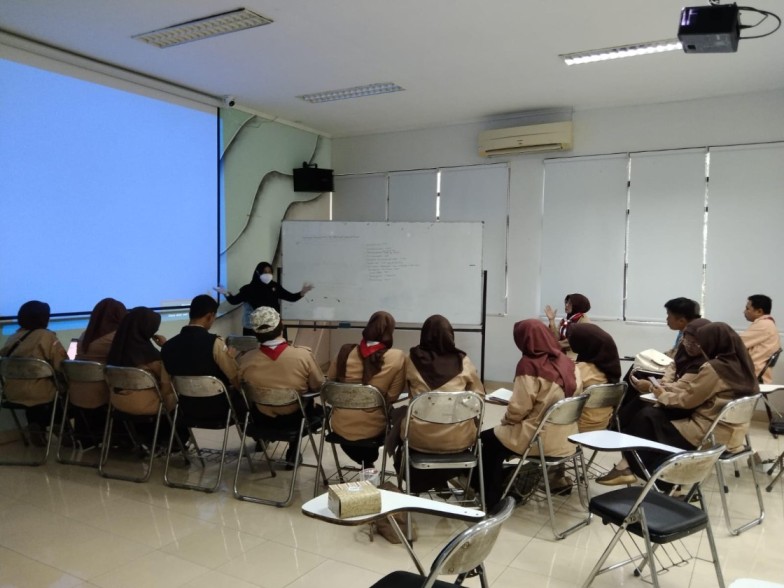
An activity of the Conservation Ecoliteracy Workshop initiated by the Indonesian Wildlife Conservation Forum (locally known as FOKSI) with Padjadjaran University (Unpad) Scouts in Indonesia’s Sub District of Jatinangor, Sumedang District, West Java Province, Tuesday, July 28, 2026. (Photo: Special)
One of the biggest causes of the damage to conservation efforts is greed, not a lack of regulations to manage or oversee wildlife and habitat conservation.
Bogor, West Java (Indonesia Window) – The fate of conservation now and in the next 25 years is quite worrying, Dr. Susanti Withaningsih, Head of the Center for Excellence in Environment and Sustainability Science at Padjadjaran University (Unpad), has said.
Such a condition was exposed in Dr. Susanti Withaningsih's analysis at the Conservation Ecoliteracy Workshop initiated by the Indonesian Wildlife Conservation Forum (locally known as FOKSI) and Unpad Scouts in Indonesia’s Sub District of Jatinangor, Sumedang District, West Java Province on Tuesday (July 28).
According to Dr. Susanti, this sad signal seems to continue unabated, despite numerous wildlife conservation programs and widespread discussion of its importance.
In front of 40 junior high and high school teachers from Sumedang district and scouting activists from Bandung city, Susanti Withaningsih stated that the condition of conservation in Indonesia is very poor.
"One of the biggest causes of damage to conservation efforts is greed, not a lack of regulations to manage or oversee animal and habitat conservation," the Javan hawk-eagle researcher explained.
She reminded that there are nine safe limits that must be maintained for the planet to survive globally. Unfortunately, according to data from the Stockholm Resilience Centre 2025, seven safe limits are already in the dangerous red zone and have already exceeded their safety limits.
"So, there are only two concerning safe limits that would overtake the planet's safe limits: ozone layer depletion (which has improved thanks to the Montreal Protocol) and atmospheric aerosol load," she noted. .
Seven other factors that have exceeded global planetary safety limits are climate change, biochemical cycles, nitrogen and phosphorus pollution, biodiversity (extreme species extinction rates), chemical pollution (microplastics and chemical waste), land system changes (Amazonian and tropical deforestation), freshwater changes (extreme global drought), and ocean acidification.
"The concept of planetary safety limits is no longer about the fear of running out of oil, but rather about the fear of permanently damaging ecological functions," said Tuten, Dr. Susanti's nickname.
Indonesia at Red Light
Meanwhile, Indonesia has entered a red light, or danger zone, specifically.
According to Dr. Susanti, five factors in Indonesia have exceeded planetary safety limits, three of which are regionally significant, and only one is within the safety limit.
First, climate change, as Indonesia's carbon emissions rank seventh highest in the world (global share 2.05 percent, Worldmeter).
Furthermore, the biochemical cycle of phosphorus and nitrogen into the environment from the Indonesian food sector contributes 6.18 percent (P) and 7.58 percent (N) to the global safe limit (Wirasenjaya 2023).
Another safe limit exceeded in Indonesia is the threat to Indonesia's biodiversity, which already ranks third.
The number of endangered species is the highest of the 277 countries surveyed. Similarly, land use change in Indonesia has reached 66 percent of the safe limit, with more than 85 percent of forest cover remaining.
"Finally, conditions that have significantly exceeded safe limits in Indonesia are chemical pollution. It turns out that according to Zhao & You 2024 data, Indonesia is the world's number one country with the highest per capita consumption of microplastics," Dr. Susanti pointed out.
Three other factors exceeding the planet's safe limits in certain regions of Indonesia are ocean acidification, atmospheric aerosol loads (in urban areas and those of land fires), and changes in freshwater.
Meanwhile, ozone layer depletion remains within safe limits.
Regarding flora and fauna, she stated that there are 2,432 species on the verge of extinction in Indonesia, including 1,381 plant species, 554 mammals, and 395 birds.
"This extinction crisis is not just a number. The root of the problem is anthropocentrism. As long as conservation efforts view endangered species solely as resources for human economic gain, this paradigm would lead to conservation failure," she said.
As long as animals are considered as tools, rather than as valuable entities in their own right, the crisis would never be resolved, this Indonesian Biodiversity member said.
Deep ecology is urgently needed as a new paradigm for conservation. Animals must be viewed from the perspective of intrinsic value, biospheric egalitarianism, and ecocentrism.
Endangered species have the right to live and thrive regardless of their usefulness to humans. All biotic components have equal rights to live and integrate within the ecosystem.
Another paradigm is that humans are not the masters of nature but rather an integral part of the web of life.
Reporting by Indonesia Window
Bagikan

Komentar
Berita Terkait

Pakistani, Indonesian FMs make telephone contact on COVID-19
Indonesia
•
03 Apr 2020

Stop war right now: Indonesian President
Indonesia
•
14 May 2022
Indonesia, PNG explore opportunities for transportation cooperation
Indonesia
•
23 Nov 2021

Indonesian domestic worker returns home from Saudi Arabia with full wages plus bonus
Indonesia
•
08 Aug 2021


Berita Terbaru

Minister: Airports affected by Mount Anak Krakatau volcanic ash reopen
Indonesia
•
08 Sep 2026

TETO: Sudut Pandang is one of important mass media in Indonesia
Indonesia
•
06 Sep 2026

Feature – Preserving 180-year-old legacy: UIN Ar-Raniry digitizes Quranic manuscript of Acehnese scholar
Indonesia
•
29 Aug 2026

Opinion – Prophet Muhammad ﷺ and journey toward literacy, ecological awareness
Indonesia
•
27 Aug 2026