Indonesia calls for de-escalation of conflict in Middle East

16 April 2024
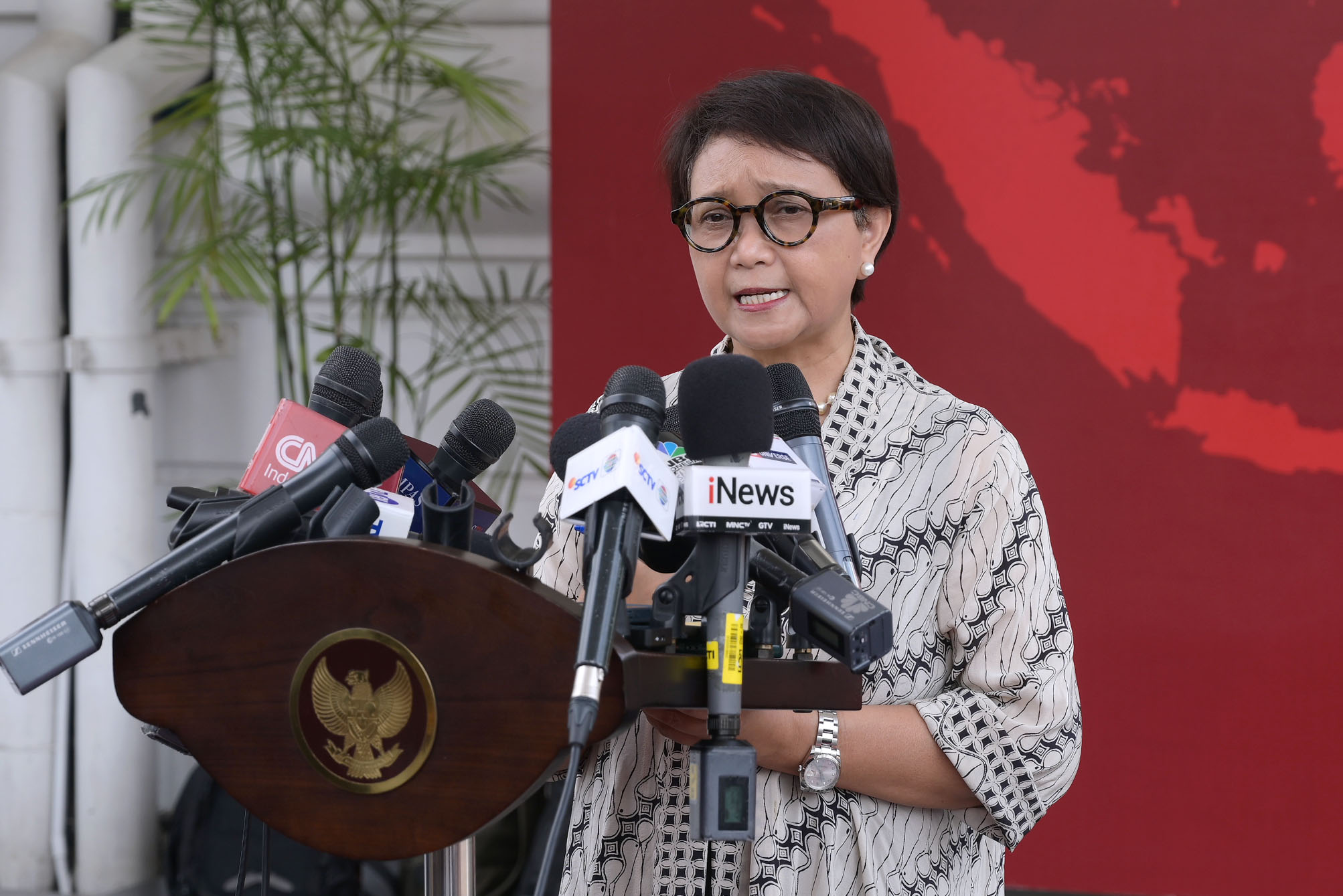
Indonesia’s Foreign Minister Retno LP Marsudi gave a press statement regarding the Indonesian government's efforts to continue to carry out diplomacy to reduce tensions or de-escalate the geopolitical situation in the Middle East, on Tuesday (April 16, 2024), in Jakarta. (The Indonesian Cabinet Secretariat)
The Indonesian government continues to monitor and make efforts to ensure protection for Indonesian citizens in areas that may be affected by the situation in the Middle East.
Jakarta (Indonesia Window) – The Indonesian government continues to make diplomatic efforts to reduce tensions or de-escalate the geopolitical situation in the Middle East.Indonesia’s Foreign Minister Retno LP Marsudi made the remarks in a press statement at the Presidential Palace here, Tuesday, after attending a limited meeting chaired by President Joko Widodo.There are two messages from the president, namely, to continue diplomatic efforts to make relevant parties restrain from and avoid escalation, because it would not bring benefits to anyone," Retno said.The minister noted that in the last few days Indonesia has carried out intensive communication with a number of parties, including the governments of Iran, Saudi Arabia, Jordan, Egypt, the United Arab Emirates, the European Union, Germany, the Netherlands, and the United States (US) to encourage them to restrain themselves from and prevent escalation."Once again, we are monitoring closely. We are alert, and we continue to make diplomatic efforts to make them restrain themselves, and we try to talk to as many parties as possible to use their influence so that escalation does not occur," Retno said.Regarding the protection of Indonesian citizens, Retno pointed out that the Indonesian government continues to monitor and make efforts to ensure protection for Indonesians in areas that may be affected by the situation in the Middle East."We continue to communicate and coordinate with several Embassies of the Republic of Indonesia, especially in Amman (the capital of Jordan), in Tehran (the capital of Iran), then in Egypt, and in other places," she explained.The minister further said that on April 13, the ministry issued travel advice and provided hotline numbers that Indonesian citizens could contact.In addition, on April 14, the ministry also made direct contacts with Indonesian citizens who are in Iran and Israel to inform them of the steps they can take if something happens or if the escalation continues to increase."So far, thank God, Indonesian citizens are in good condition, meaning they are not affected by the current situation. We continue to monitor closely and almost every day friends from the Ministry of Foreign Affairs hold virtual meetings with the Indonesian embassies in areas that could be affected if an escalation occurs, including a contingency plan that we have also made," she said.Meanwhile, Indonesia’s Coordinating Minister for Economic Affairs Airlangga Hartarto said that the government is also alert and mitigating the impact of tensions in the Middle East on the Indonesian economy."In terms of the economy, of course we see a spike in oil prices due to the Israeli attack on the Iranian Embassy in Damascus (the capital of Syria) and also the retaliation carried out by Iran," Airlangga said.From an economic perspective, the Red Sea and the Strait of Hormuz are important, especially because the strait can hold 33,000 tankers and the Red Sea around 27,000, he said, adding that the increasing freight cost is the one of the things that should be mitigated.Fundamentally, according to Airlangga, currently the Indonesian economy is growing solidly at around five percent, its inflation is in the range of 2.5 plus minus 1 percent, the trade balance is in surplus, and foreign exchange reserves are around 136 billion US dollars.However, the government continues to anticipate the impact of increasing global economic uncertainty on the national economy, he said."Of course we need to implement several policies, including a fiscal and monetary mix policy, maintaining exchange rate stability, maintaining the state budget, and monitoring increases in logistics and increases in oil prices," he noted.Airlangga added that the government also continues to carry out structural reforms while improving the investment climate in the country.The government continues to look at structural reforms and maintain investor expectations, as well as strengthening competitiveness, in addition to drawing long-term investment to Indonesia."So such certainties must be maintained. Various scenarios have been discussed, and the deficit is maintained within the range permitted by law," Airlangga said.Reporting by Indonesia Window
Bagikan

Komentar
Berita Terkait
Indonesia, Suriname share free visas
Indonesia
•
29 Sep 2020

News Focus: Indonesia forms special team to deal with hacker Bjorka issue
Indonesia
•
14 Sep 2022
Indonesian solidarity agency LAZSip gives free health checkup to people in West Java
Indonesia
•
02 Dec 2025
Soap from Indonesia still in demand in Egyptian market
Indonesia
•
23 Apr 2023


Berita Terbaru
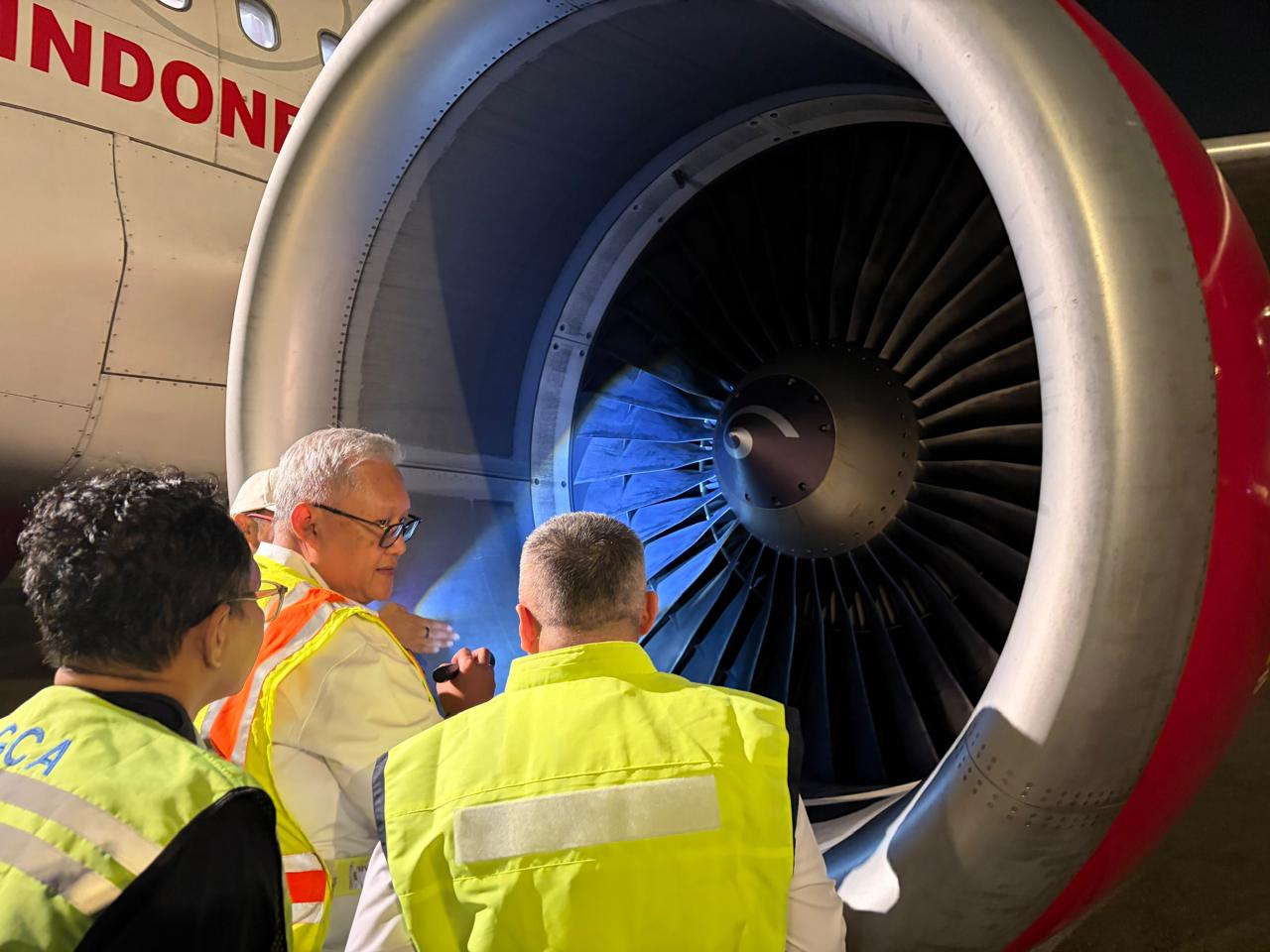
Minister: Airports affected by Mount Anak Krakatau volcanic ash reopen
Indonesia
•
08 Sep 2026
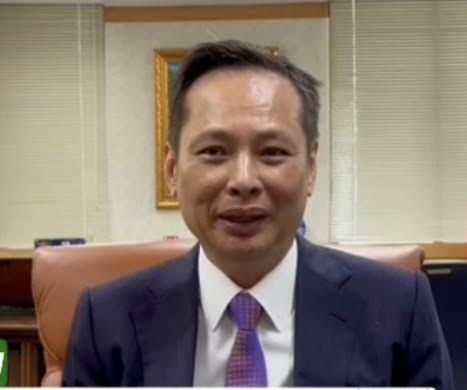
TETO: Sudut Pandang is one of important mass media in Indonesia
Indonesia
•
06 Sep 2026
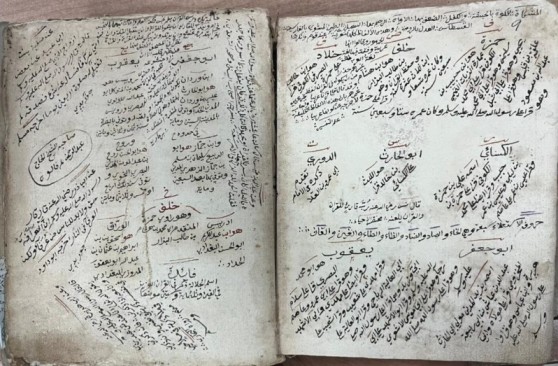
Feature – Preserving 180-year-old legacy: UIN Ar-Raniry digitizes Quranic manuscript of Acehnese scholar
Indonesia
•
29 Aug 2026
Opinion – Prophet Muhammad ﷺ and journey toward literacy, ecological awareness
Indonesia
•
27 Aug 2026