Opinion - Iran, Indonesia, and remnants of Washington’s Cold War Regime change

27 March 2026
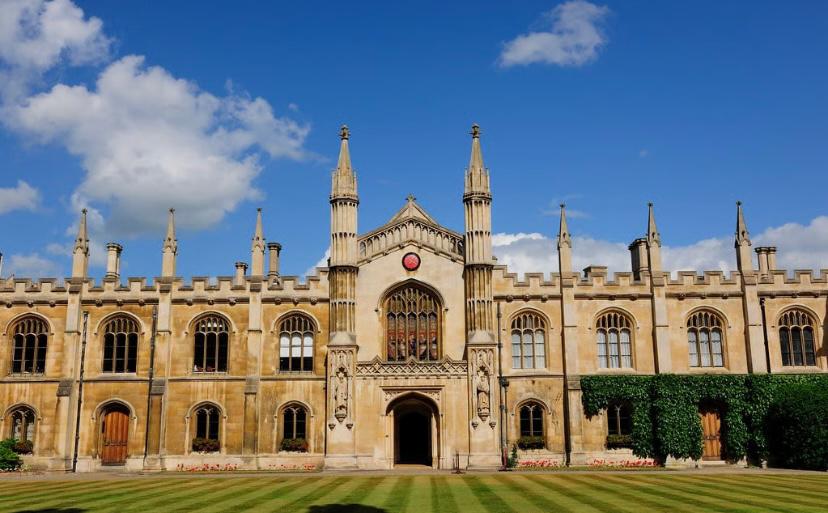
The University of Cambridge. (Photo: Mumtaza Chairannisa)
Jakarta (Indonesia Window) - The current conflict in Iran with the United States is neither surprising nor new.
It is an echo of Cold War regime that changes in post-colonial states. In 1953, Mohammad Mosaddegh became the first casualty of Washington’s regime that changed.
The 1965 events in Indonesia represented an evolved form of Cold War interventionist strategies, later identified as the ‘Jakarta Method.’
The Cold War, as commonly understood, was between two parties: the United States and the Soviet Union, but its conflicts were interfered greatly with statecraft in post-colonial states.
Recent scholarship, much like Vincent Bevins’ The Jakarta Method, has demanded that other regions forced into this conflict include Sri Lanka, Latin America, and Southeast Asia. Bevins calls for a broader lens in the study of the Cold War, encompassing the parties affected by this conflict and those enduring the ongoing effects of its legacy.
The ‘Hot’ Cold War context
When the Cold War broke out, new nation-states scrambled to find their foothold in the modern world.
The countries that were caught in the crossfire of the East-West ideological conflict were members of the Global South, situated closer to the equator. Hence, the ‘Hot’ Cold War.
This struggle, coupled with the lingering fear of recolonisation, became a strong foundation for nation-building.
In Indonesia, this birthed the ‘Bebas-Aktif’ (Independent and Active) doctrine for foreign policy that attempted to navigate global affairs without aligning with either superpower bloc.
At the time, Capitalism was seen as an ideology forced upon new leaders by the colonial entities that had subjugated them for so long.
Therefore, the partiality to Communism or Socialism newly independent states exhibited was perhaps not a complete embrace of the ideology but rather a rejection of anything related to the successors of Western imperialism.
Despite the force of both sides, there were attempts to establish a stance that sided neither with the United States nor the USSR, including the Non-Aligned Movement (NAM) or the Asia-Africa Conference.
NAM described the initial conference in Bandung in 1955 as occurring ‘out of a desire by the convening countries not to be involved in the East-West ideological confrontation of the Cold War, but rather to focus on national independence struggles and their economic development.’
The case of Iran
Mohammad Mossadegh was the first popularly elected leader in Iran and could have become a promising figure for other new nations.
He was an anti-monarch, aristocrat who, much like the mission of NAM, aimed to protect national resources and national economic growth.
After the British’s long presence in the Iranian oil industry, Mossadegh fostered popular sentiment to evict them from Iranian resources.
Mossadegh’s nationalisation of the Anglo-Iranian Oil Company (AIOC; now known as BP) resulted in the first of Washington’s covert diplomatic and intelligence operations.
Operation Ajax, as seen through declassified CIA documents in 2013, was the product of joint efforts by the CIA, the British MI6, and the US-backed Pahlavi Dynasty.
The operation relied on propaganda to stage a coup against Mossadegh, who was then replaced by Shah Reza Pahlavi.
In 1954, the Shah reversed Mossadegh’s efforts and signed the Iran-Consortium Agreement, which allowed Western companies operational control of Iranian oil production, refining, and exports.
A telegram from the US Ambassador to the UK in 1954 stated that the market share was divided, with the AIOC receiving 40 percent, five US companies receiving 40 per cent and the remaining 20 percent was shared between Dutch and French companies.
The Shah attempted to cancel the Consortium Agreement in 1973, refusing a renewal.
Western support for his regime quietly withdrew. Even Washington's chosen leader in Tehran was expendable the moment he reached for Iran's oil. The cancellation was finalised with the 1979 Islamic Revolution.
Historians of US foreign policy, including Mary Ann Heiss, later justified the 1953 coup by saying it was necessary ‘to save Iran from communist domination.’
Additionally, while former British spy Norman Darbyshire came forward in 2020 claiming that the British did believe Mossadegh would eventually be influenced by Soviet ideology.
At the time, there was only one member of Mossadegh’s government who was from the communist Tudeh party.
The Indonesian reminder
The case at home regarding the 1965 coup is an important reminder for Indonesians. Sukarno, being openly anti-Western imperialism, nationalised plantations in an act of defiance against Dutch colonialism and, with Law no. 86 of 1958, successfully brought 90 percent of Dutch-owned companies under state governance.
The United States attempted to influence Indonesia through the International Monetary Fund and the World Bank.
The fund toured Indonesia in 1962 and sought out aid agreements with conditions of austerity, easing of enterprise nationalisation, and government spending.
It was apparent, given the state of the economy, that Indonesia had needed them and was briefly willing to conform to the institutions’ policies.
However, Sukarno’s distaste for conditional aid that involved adherence to Western-favoured foreign policy led him to withdraw from the IMF and the World Bank in August 1965, and he called for the US to ‘go to hell’ with their aid in his independence speech.
It was, in particular, the US’s request to back down from the Malaysian confrontation that was the last straw for Sukarno.
The coup against Sukarno occurred on the 30th of September of the same year.
Upon becoming acting president two years later, Suharto’s second law, Law no. 2/1967, stated that Indonesia would join the IMF and the World Bank once more to receive aid, undoing Sukarno’s efforts before his coup.
It should be noted also that, under Law no. 1/1967 on Foreign Capital Investment, Suharto opened Indonesian markets to foreign investment for the first time in years.
The last of Sukarno’s anti-imperialist efforts, NAM, was dismantled through a series of coups following his own fall from power.
Between 1965 and 1966, Kwame Nkrumah of Ghana and Ahmed Ben Bella of Algeria were forcibly removed from power, and NAM's leadership was systematically dismantled within a single year.
Lessons for the present
The current conflict in Iran against the United States and Israel is not dissimilar to the cases of regime change in the past.
While the current Iranian government is neither democratic nor popular as Mossadegh’s had been, the basis for the United States to have caused a conflict is the same. The legitimacy of the targeted regime was never the determining factor.
The Shah and Suharto have been described by Western media as brutal authoritarian regimes. What they shared was not democracy but rather compliance with Washington.
Iran wants sovereignty over its resources and its geopolitical destiny, but the Trump administration wants control over these resources and to extend its hegemony across the region.
Washington has never run out of justifications for intervention. As perceived by Trump’s administration, it is the nuclear threat, but for Eisenhower, it was the Communist threat.
Since 1953, there have been dozens of Washington-backed regime changes. There was the military ousting of Guatemalan President Jacobo Arbenz Guzmán in 1954 after he nationalised the United Fruit Company, which was a US corporation.
The military coup of João Goulart in 1964 in Brazil followed the same formula after he nationalised oil and pursued land reforms.
Bolivia’s General Torres suffered the same fate in 1971 after attempting to nationalise the tin industry.
President Salvador Allende in Chile nationalised the copper industry and was brought down in Operation Condor.
In each instance, these leaders attempted self-determination of their own resources but were made to participate in Washington’s free market agenda.
Conclusion
The 2026 war in Iran is not an exceptional case, and the modus operandi is not new to Iran.
With Mossadegh in 1953, the US had learnt how to enact regime changes through crafted narratives of necessity and with Indonesia in 1965, it had a distinct structure to work from.
History suggests that challenges to Washington’s resource access often lead to geopolitical friction.
Perhaps, had Washington and the CIA not carried out Operation Ajax, many of the nations around the world would not have suffered the fate they had.
Observing Iran should serve as a reminder for Indonesia to uphold its 'Bebas-Aktif' principles.
For now, the global 'free market' remains deeply asymmetrical, often conditional upon the strategic interests of dominant Western powers. Free for the United States, and conditional for everywhere else.
End
Author: Mumtaza Chairannisa is a researcher at AMECRD. Her work explores the intersections of maritime history, heritage, and transnational networks of religion, politics, and trade across Southeast Asia and the Indian Ocean. She holds bachelor's degrees from Sciences Po Paris and the University of California at Berkeley, as well as an MPhil from the University of Cambridge.
Bagikan

Komentar
Berita Terkait

COVID-19 – 161 doctors in Indonesia die during pandemic
Indonesia
•
03 Nov 2020

COVID-19 – 450,000 Indonesian health workers get third vaccine shots
Indonesia
•
26 Aug 2021
Indonesian health workers stand with Palestine
Indonesia
•
17 Nov 2023

Muslim EduFest 2024 presents representatives from Islamic University of Madinah
Indonesia
•
15 Aug 2024


Berita Terbaru

Minister: Airports affected by Mount Anak Krakatau volcanic ash reopen
Indonesia
•
08 Sep 2026

TETO: Sudut Pandang is one of important mass media in Indonesia
Indonesia
•
06 Sep 2026
Feature – Preserving 180-year-old legacy: UIN Ar-Raniry digitizes Quranic manuscript of Acehnese scholar
Indonesia
•
29 Aug 2026
Opinion – Prophet Muhammad ﷺ and journey toward literacy, ecological awareness
Indonesia
•
27 Aug 2026