Indonesia responds positively to UNESCO initiative on media literacy in religious education

25 April 2026
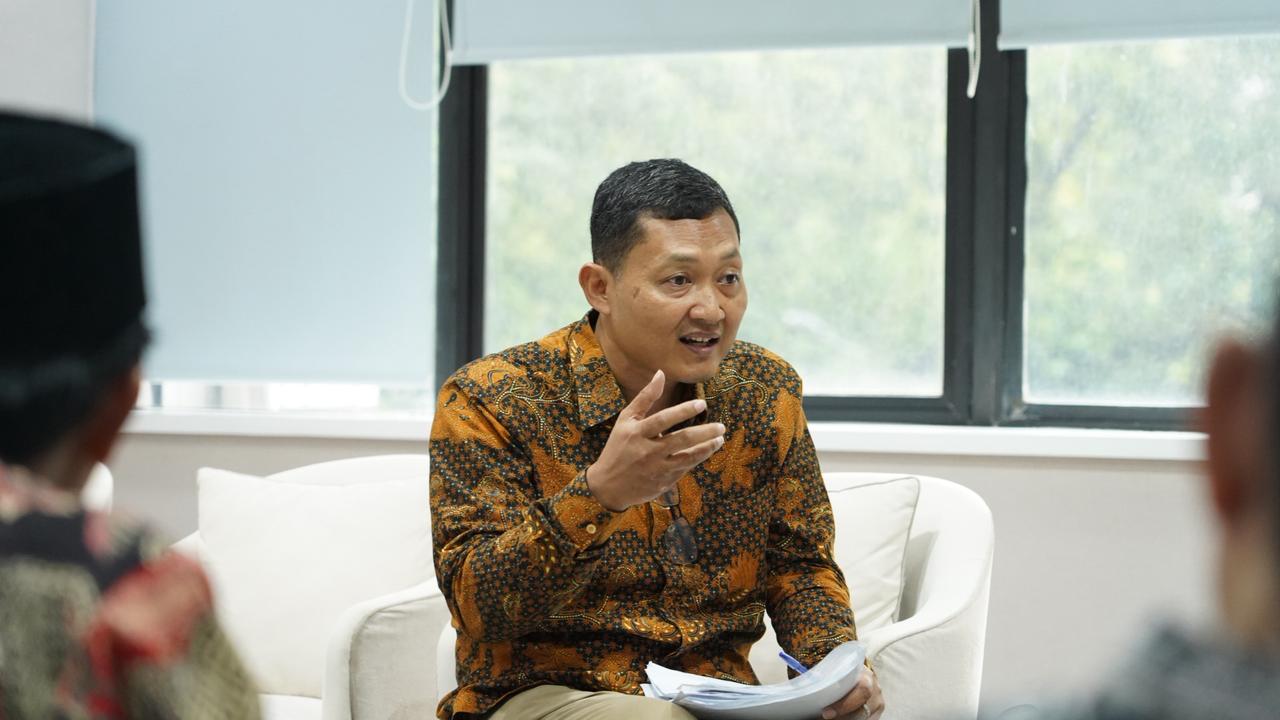
A researcher from UIII (Universitas Islam Internasional Indonesia), Aan, is presenting findings from a study of 417 madrasah teachers and principals to assess their understanding and implementation of Media and Information Literacy. (The Indonesian Ministry of Religious Affairs)
The development of media literacy modules integrated with religious curricula is one of the key innovations of the program, that includes topics such as addressing hate speech, responsible use of social media, and strengthening religious values in digital spaces.
Jakarta (Indonesia Window) – Indonesia’s Minister of Religious Affairs Nasaruddin Umar expressed a positive response to UNESCO’s initiative on strengthening media and information literacy (MIL), particularly within religious education.
The minister pointed out that an education-based approach is relevant to addressing challenges in protecting young generations amid the rapid flow of digital information.
During the meeting with UNESCO at the Ministry of Religious Affairs in Indonesia’s capital Jakarta, on Wednesday (Apr. 22), the minister emphasized the role of religious education institutions in building information resilience.
“We need to protect the students,” he stressed, explaining that Indonesia’s religious education ecosystem includes around 42,000 Islamic boarding schools. Right now we have non-formal education called pondok pesantren. In that context, we have a total of around 42,000 pondok pesantrens,” he noted.
According to the minister, the key challenge lies not only in the presence of harmful content but also in the capacity of educators and the education system to respond, highlighting that teachers in religious schools are not fully equipped with adequate training.
In line with this, UNESCO emphasized that literacy-based approaches are essential to addressing digital risks, including disinformation, hate speech, and online harms.
Director of the UNESCO Jakarta office, Maki Katsuno-Hayashikawa, stated that media literacy must be implemented systematically and proactively.
“We thought about to see how we can use media and information literacy in a systematic way—not just to be preventive, but to proactively addressing some of the issues around disinformation, misinformation, online harms, and hate speeches,” she said.
She also stressed the critical role of teachers in creating a safer digital environment. “Training teachers on this issue is very critical,” she added.
The program developed by UNESCO and its partners in Indonesia adopts a research-based and capacity-building approach.
UNESCO Programme Specialist Ana Lomtadze explained that the study involved hundreds of schools to understand real conditions. “We surveyed 417 schools, including madrasas, and a researcher from UIII (Universitas Islam Internasional Indonesia), Aan, also held interviews with different teachers, principals from religious schools,” she said.
The findings indicate that existing digital literacy training remains limited and has not been effectively integrated into teaching practices. “This kind of training has been very short and very quick, like two hours mostly, so they were not able to integrate what they learned in their teaching,” Ana noted.
UNESCO proposes a systemic approach through curriculum development, teacher training, school policies, and collaboration with parents.
“What we are proposing is to integrate the media literacy approach and different tools at a systemic level, which means teacher training, school guidelines, policies,” she said.
Research findings presented by the team also show that teachers already understand the concept of media literacy but lack implementation skills.
“Educators and principals at Madrasah Tsanawiyah and Aliyah generally grasp the concept of Media and Information Literacy (MIL), but they still lack the practical 'know-how' to implement it,” Aan stated.
The development of media literacy modules integrated with religious curricula is one of the key innovations of the program. These modules include topics such as addressing hate speech, responsible use of social media, and strengthening religious values in digital spaces.
The program has also been piloted through teacher training in several regions, showing strong enthusiasm and independent initiatives by participants to implement the materials in their respective schools.
As a next step, institutional strengthening and policy integration are considered essential to ensure sustainable implementation of media and information literacy in religious education environment.
Reporting by Indonesia Window
Bagikan

Komentar
Berita Terkait
LSPR Institute, Nozominosono, ERIA, hold discussion on developmental disabilities
Indonesia
•
12 Mar 2023
COVID-19 – Indonesia gives third doses of vaccination to all citizens for free
Indonesia
•
11 Jan 2022
Indonesian government launches one map policy to accelerate development
Indonesia
•
20 Jul 2024
Indonesian minister discusses Afghan women education in New York
Indonesia
•
20 Jan 2023


Berita Terbaru

Minister: Airports affected by Mount Anak Krakatau volcanic ash reopen
Indonesia
•
08 Sep 2026
TETO: Sudut Pandang is one of important mass media in Indonesia
Indonesia
•
06 Sep 2026
Feature – Preserving 180-year-old legacy: UIN Ar-Raniry digitizes Quranic manuscript of Acehnese scholar
Indonesia
•
29 Aug 2026
Opinion – Prophet Muhammad ﷺ and journey toward literacy, ecological awareness
Indonesia
•
27 Aug 2026