Iran waives Strait of Hormuz transit fees for fellow countries, Indonesia excluded

25 April 2026
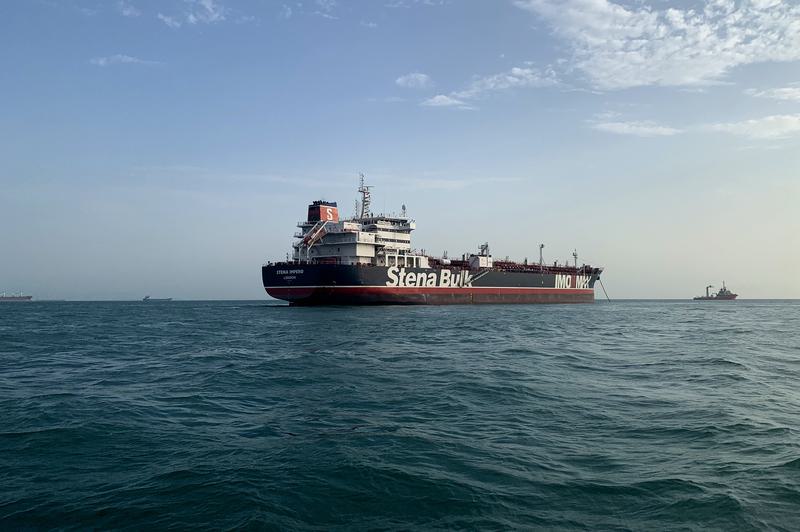
This photo released on July 21, 2019, shows the British oil tanker 'Stena Impero' near the Strait of Hormuz, Iran. (Xinhua/ISNA/Morteza Akhoundi)
Iran's Strait of Hormuz transit fees is aimed to ensure security in the vital waterway. Iran stated that it has closed the strait and will reopen it once the US naval blockade is fully lifted.
Jakarta (Indonesia Window) – Iran has granted exemptions to several countries, including Russia, from transit fees for passing through the Strait of Hormuz, Iranian Ambassador to Russia Kazem Jalali was quoted as saying by RIA Novosti.
"Currently, we are granting exemptions to several countries, but I don't know what will happen in the future. However, our foreign ministry is currently working to implement the planned exemptions for fellow countries, such as Russia," the ambassador said.
Iran has announced plans to impose fees on shipping through the Strait of Hormuz following the US-Israeli attack on the country, stating that the fees are related to efforts to ensure security in the vital waterway. Iran stated that it has closed the strait and will reopen it once the US naval blockade is fully lifted.
First Deputy Speaker of the Iranian Parliament Hamid Reza Haji Babaei said on Thursday (April 23) that Iran had received payment for transit fees for passing through the strait for the first time, with the funds transferred to the country's central bank.
Following the US-Israeli attacks, Iran said it would block ships, except those from "non-hostile" countries, from using the strait. Some ships, including those from China, Iraq, and Pakistan, passed through the route after reaching diplomatic agreements with Iran.
The Iranian government also reportedly imposed import duties on ships and said its control over the strait should continue after the conflict. Threats from drones, mines, and small boats, as well as insurance costs, have made shipping companies reluctant to use the route.
The Strait of Hormuz, a narrowing point between the Persian Gulf and the Gulf of Oman, is the only sea route to the open ocean, with about 20 million barrels of oil, or one-fifth of global consumption, passing through it daily before the war broke out.
Reporting by Indonesia Window
Bagikan

Komentar
Berita Terkait

Indonesia receives 100 ventilators from the U.S
Indonesia
•
29 Jul 2020
Indonesia calls for developing sustainable marine economy
Indonesia
•
07 Dec 2022

Taiwan turns down news about refusing Indonesian workers
Indonesia
•
09 Sep 2020
Halal Expo introduces halal products from Indonesia, Iran: Iranian ambassador
Indonesia
•
27 Oct 2023

Berita Terbaru
Minister: Airports affected by Mount Anak Krakatau volcanic ash reopen
Indonesia
•
08 Sep 2026

TETO: Sudut Pandang is one of important mass media in Indonesia
Indonesia
•
06 Sep 2026
Feature – Preserving 180-year-old legacy: UIN Ar-Raniry digitizes Quranic manuscript of Acehnese scholar
Indonesia
•
29 Aug 2026

Opinion – Prophet Muhammad ﷺ and journey toward literacy, ecological awareness
Indonesia
•
27 Aug 2026