Waste-processing vessel offers solution for coastal, small island areas

20 April 2026
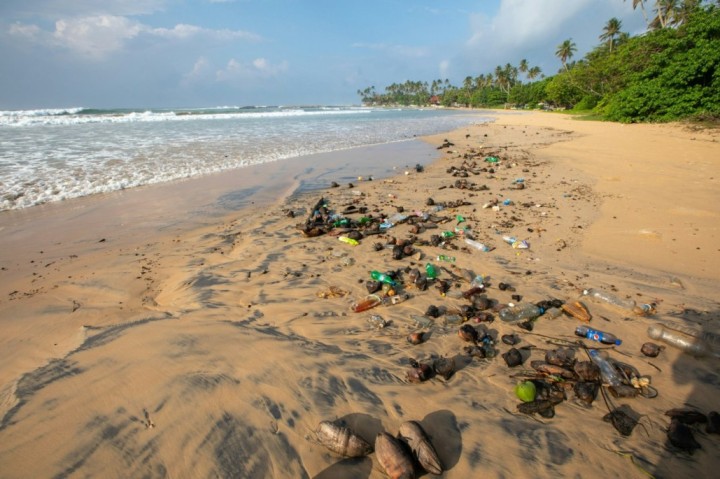
Illustration. (Sebastian Latorre on Unsplash)
The waste-processing vessel aims to reduce dependence on mainland waste transport while creating local economic value.
Bogor, W Java (Indonesia Window) — Waste management in coastal areas such as Kepulauan Seribu — situated north of Jakarta's coastline in the Java Sea — has complex challenges.
Wastes in such areas originate from domestic activities, the tourism sector, and marine debris drifting in from the mainland, all within severely land-constrained environments.
To address the issue, a researcher at Center for Hydrodynamics Technology of Indonesia's National Research and Innovation Agency (BRIN), Daud Saputra Amare Sianturi, has proposed a waste-processing vessel as an integrated waste management solution for coastal and small island areas.
"There are three sources of waste in Kepulauan Seribu: domestic, tourism, and marine debris. Given the limited land availability, the use of conventional waste processing technology becomes a highly risky issue," Daud explained at the 15th edition of BRIN's Researcher Class session, held on Wednesday, April 15, as quoted from the BRIN network website here on Monday.
Daud noted that existing approaches — including incinerators and land-based waste management systems — have failed to comprehensively resolve the problem as space constraints, public resistance, and high operational costs remain the primary obstacles.
"Many people reject land-based processing facilities out of concern over their impacts, such as odors or potential diseases," he said.
As an alternative, BRIN has developed the concept of a waste-processing vessel capable of treating waste on-site, without requiring additional land. The technology is considered more flexible and adaptive to archipelagic conditions, while reducing reliance on mainland waste transport infrastructure.
"This vessel requires no land, because the processing takes place on the water. It is also flexible in handling varying weather conditions and can relocate as needed. The residues it produces can be further utilized, giving the technology economic value," Daud pointed out.
Research findings indicate the innovation offers not only environmental benefits but also economic potential. On-site waste processing can lower logistics costs, create new employment opportunities for local people, and foster a circular economy built around waste management.
On the social front, community acceptance of the innovation has been relatively high, though several prerequisites were identified as essential. These include comprehensive public education prior to implementation, assurances that operations will not disrupt daily community activities, and integration with existing waste management systems.
"Community acceptance is a key factor. Technological innovation must serve as a complementary solution — not unilaterally replace systems that are already in place," Daud stressed.
Beyond waste management, the vessel concept also contributes to climate change mitigation by reducing greenhouse gas emissions and curbing pollution in coastal ecosystems.
With an integrated approach, the technology is expected to support environmental sustainability while improving quality of life for island communities.
In the future, BRIN is encouraging cross-sector collaboration to accelerate the technology's implementation, involving local governments, industry players, and communities.
With the right support, the waste-processing vessel has the potential to become a replicable waste management model for coastal and small island areas across Indonesia.
Reporting by Indonesia Window
Bagikan

Komentar
Berita Terkait
China's breakthrough in treating hypertrophic heart disease garners global attention
Indonesia
•
31 Jul 2024

Feature – Humanoid robots shatter human record, showcase autonomy at Beijing half marathon
Indonesia
•
24 Apr 2026
Indonesia has seven species of lobsters
Indonesia
•
02 Dec 2020
Study reveals human impact on increased rainfall variability over past century
Indonesia
•
27 Jul 2024


Berita Terbaru

Feature – China pioneers AI-driven education as world seeks new schooling models
Indonesia
•
23 Aug 2026

China marks National Ecology Day with solid gains in green push
Indonesia
•
17 Aug 2026
Beijing ranks among global megacities with high biodiversity levels
Indonesia
•
25 May 2026
China increasingly significant in global biodiversity conservation, says British plant charity
Indonesia
•
25 May 2026