Book Review – SWOT analysis of Madinah State leads to universal strategic government management model

01 April 2026
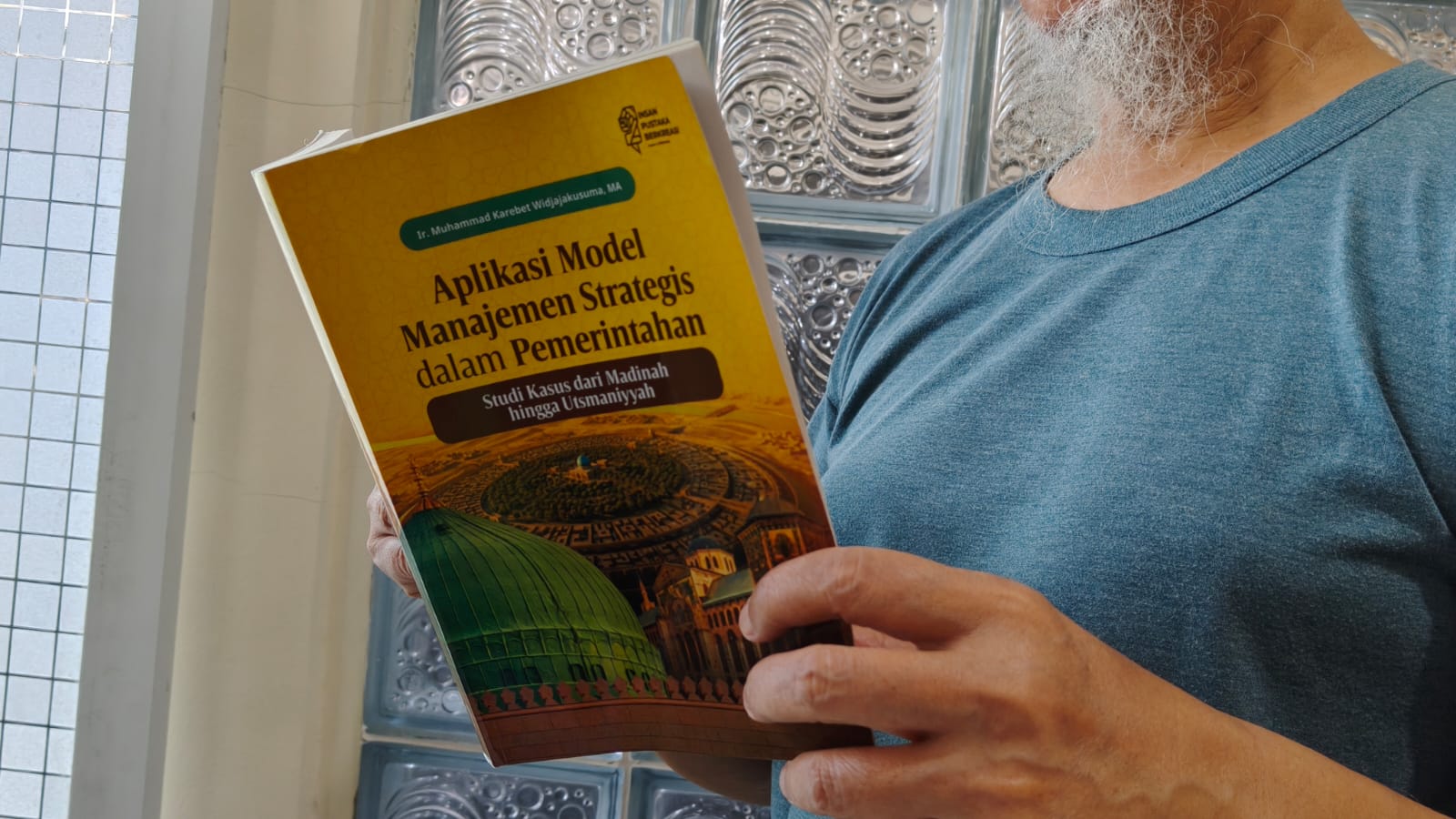
A man on Wednesday (April 1) was reading a book on strategic management with case study from Madinah to Utsmaniyyah by Muhammad Karebet Widjajakusuma. (Indonesia Window)
Bogor, W Java (Indonesia Window) – What would happen if the Islamic State of Madinah, which was established approximately 1,400 years ago, were analyzed using a SWOT analysis?
The result might be like a condition as described in the book entitled 'Application of Strategic Management Models in Government' by Muhammad Karebet Widjajakusuma.
This book was produced based on the long history of Islamic civilization. However, it is highly recommended for those who live in the era of baby boomers to Alfa Generation, and even beyond: Beta Generation.
Muhammad Karebet initiated this work by scientifically studying cases from the State of Madinah to the Ottoman Empire through contemporary analysis to prove that the system of government during the time of Prophet Muhammad (peace be upon him/ﷺ) remains highly relevant today.
During the time of Prophet Muhammad ﷺ, the government of Madinah state began with the Charter of Madinah, a state constitution that governed all citizens regardless of religion. Islam, the blessing for the universe, was embodied in the application of all Islamic rules without exception.
The author cites Abu Fuad's book, ‘Daulah Islam’, which explains that the Prophet Muhammad ﷺ established the structure of the Islamic State/Daulah, with the functions of a head of state, mu'awin (assistants), a secretary of state, regional rulers (wali and amil), qadhis (judges), the military, bureau chiefs, and the assembly of the people/shura (community council).
The structure of the Madinah state, from the time of the Ottoman Caliphate to the present day, remains relevant.
Contemporary approaches
Contemporary approaches include SWOT (Strength, Weaknesses, Opportunities, Thread) analysis, the SMART (Specific, Measurable, Achievable, Relevant, and Time-bound) method, and TEAM (Together Everyone Achieve More) analysis, which are used as tools to examine the core values of Islam (the worldview of Islam), the vision, mission, and objectives of the government system, which have been consistently applied from the Madinah State to the Ottoman Caliphate.
Karebet employs these scientific approaches as part of a reconstruction study at the state level, from the State of Madinah to the Ottoman Caliphate, which aims to realize an Islamic worldview: a creed that awakens and a law that brings blessings.
Journalistics
As a journalist, I began this review of scientific literature with the title of of the wjich is eye-catching, 'Application of Strategic Management Models in Government, Case Studies from Madinah State to the Ottoman Empire'.
This title is followed by coherent writing, flowing chronologically from the lead (first paragraph) to the subsequent paragraphs throughout the book until the conclusion.
The book also includes Islamic figures from the Madinah period to the Ottoman Caliphate, along with their characterizations. It also cites the setting of the story in accordance with the journalistic principle of the 5 Ws + 1 H (what, who, why, when, where, and how), and of course, uses good and correct Indonesian.
This way of writing keeps readers engaged until the end of the story. This is because each chapter is filled with new information and contemporary theories, and reminds us of the worldview of Islam (faith and sharia), as well as the vision and mission to achieve the goal of rahmatan lil 'alamin (blessing for the universe).
This is so that there are no longer any mustahik (zakat recipients) because everyone has transformed into muzakki (zakat givers). This means that the society is truly prosperous.
This book is also enriched by endorsements and testimonies from community leaders with extensive knowledge and competencies consistent with the book's content.
Readers are also assured that this book was written with reference to various scientific sources through extensive library research and citations of relevant verses from the Quran and hadiths (the syaings, deeds and silence of Prophet Muhammad ﷺ.
This book was written as one of the methods of Islamic da'wah (preaching), inherited from Prophet Muhammad ﷺ, to achieve a state of rahmatan lil 'alamin (blessing for the universe) filled with blessings.
The author advises that this book be part of the learning process and a source of inspiration in the effort to attain blessings through the process of reading, which is part of the great legacy of Prophet Muhammad ﷺ.
Book profile
This book, published in February 2026, is worth owning and reading due to its attractive color combination on the cover and its appearance (frontage). Furthermore, the paper color, writing, and font are comfortable to read.
This book, with 216 pages and 42 Roman numerals, is also lightweight (handy), measuring 15 x 20 cm, making it easy to carry anywhere.
Author's brief profile
Author, Muhammad Karebet Widjajakusuma, holds a bachelor's degree (1996) from the Bogor Agricultural Institute (locally known as its abbreviation IPB) in the Department of Agricultural Industrial Technology and a master's degree (2010) from the University of Malaya, Malaysia, in the Islamic Studies program in Human Development.
The author has conducted comparative studies in 18 countries, namely Singapore, Malaysia, Thailand, Brunei Darussalam, Japan, Korea, Taiwan, Australia, Iran, Egypt, Saudi Arabia, the United Kingdom, France, the Netherlands, Germany, Turkey, New Zealand, and the United Arab Emirates.
With his knowledge, the author possesses core competencies: strategic management and transformational leadership, decision-making based on the analytical hierarchy process method, and metanoiac motivation and management training.
The author is a consultant in strategic management and policy, a trainer in management and motivation training, and an author of books on management and motivation from a Sharia perspective.
Suggestions
To make the book more interesting, several important aspects need to be thoroughly considered. First, the addition of relevant photos or illustrations is highly recommended, especially those accompanied by informative captions. This visual presence not only enhances the appearance but also helps readers understand the setting or background of the stories more concretely and vividly.
Furthermore, to broaden the readership, the book should also be presented in a foreign language, at least in English. This is important because the theme raised, particularly about Islam, are universal and can attract readers from various countries. This way, the book is expected not only to be enjoyed by local readers but also reach a global audience.
The book is also suggested to use a hardcover format to provide added value. Books with hardcovers tend to be more visually attractive, more durable, and have an exclusive feel.
This format even allows the book to function as a coffee table book, meaning a book that is not only read but also displayed as part of the room's aesthetic.
I hope the author continues to create, exploring the richness of Islamic history, full of wisdom. This is what I have always looked forward to.
Barakallahu fiikum
By: Bambang Purwanto (a senior journalist)
Bagikan

Komentar
Berita Terkait
Embassy opens Indonesian language classes for Finns
Indonesia
•
28 Sep 2021

Saudi woman meets her Indonesian mother after 20 years of separation
Indonesia
•
22 Dec 2019

COVID-19 cases to reach 1 mil: WHO
Indonesia
•
02 Apr 2020

From sightseeing to self-discovery: Young Chinese travelers redefine outbound tourism
Indonesia
•
22 May 2026

Berita Terbaru
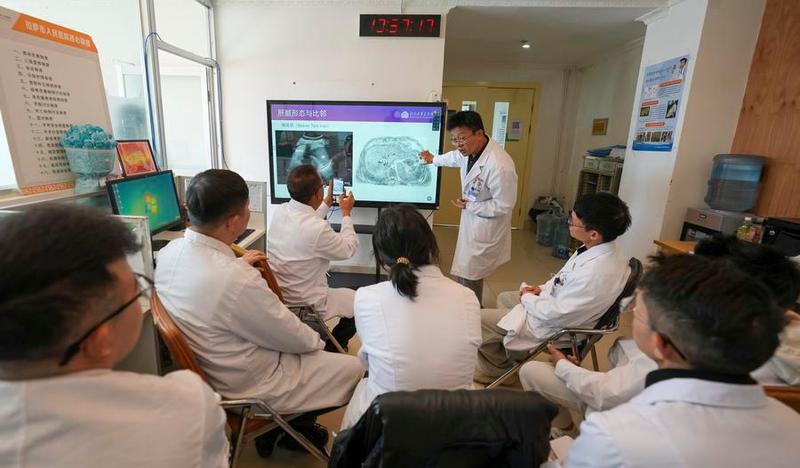
Feature – From barefoot to high-tech: How Chinese doctors shaped a healthier nation
Indonesia
•
23 Aug 2026

Feature – Paddling, camping, birdwatching: How a greener China reshapes urban getaways, lifestyles
Indonesia
•
17 Aug 2026
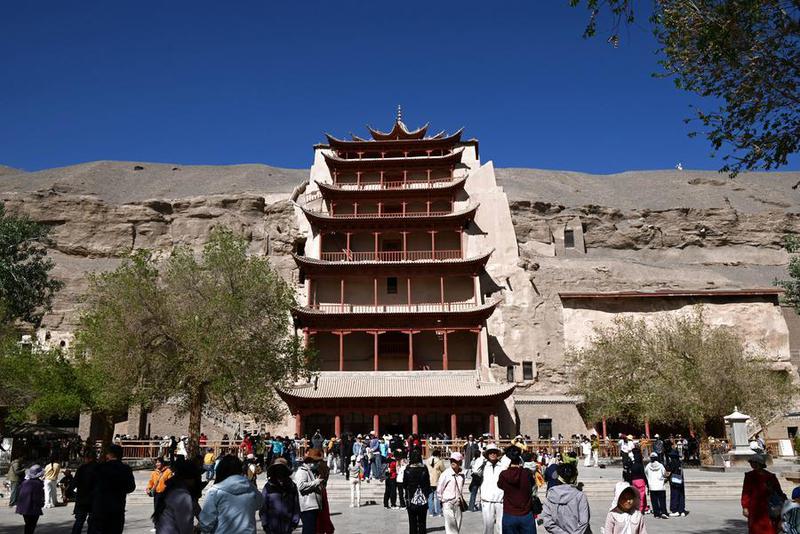
The rain, the caves and the quest to preserve Mogao Grottoes
Indonesia
•
16 Aug 2026

China aims to elevate basic education with focus on virtue, health and equity
Indonesia
•
29 Jul 2026