Indonesia's endemic warty pig vulnerable to African swine fever, requiring ex-situ conservation

20 December 2025
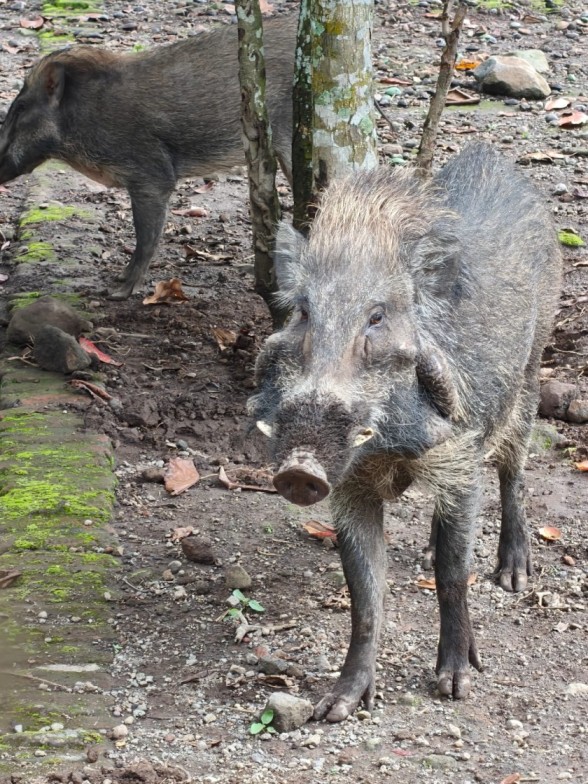
Two warty pigs(Sus verrucosus) at Prigen Conservation Breeding Ark (PCBA), in Pasuruan district, East Java province, on Friday (December 19, 2025). (Indonesia Window)
The warty pig (Sus verrucosus), an Indonesian endemic that is often marginalized in conservation issues, now faces a serious threat due to its susceptibility to the African swine fever (ASF) virus.
Pasuruan, East Java (Indonesia Window) — The warty pig (Sus verrucosus), an Indonesian endemic that is often marginalized in conservation issues, now faces a serious threat due to its susceptibility to the African swine fever (ASF) virus."In addition to habitat destruction and poaching, Southeast Asian wild pigs are highly sensitive to the African swine fever virus. If this virus enters the wild pig population, they have no immunity whatsoever. This has already happened in Indonesia’s main islands of Kalimantan, Sumatra, and Sulawesi," said Jochen Menner, a curator at the Prigen Conservation Breeding Ark (PCBA), during a presentation at a media trip to the PCBA Prigen, Pasuruan district, East Java province, on Thursday (Dec. 18).
Jochen Menner, a curator at the Prigen Conservation Breeding Ark (PCBA), during a presentation at a media trip to the PCBA Prigen, Pasuruan district, East Java province, on Friday (December 19, 2025). (Indonesia Window)
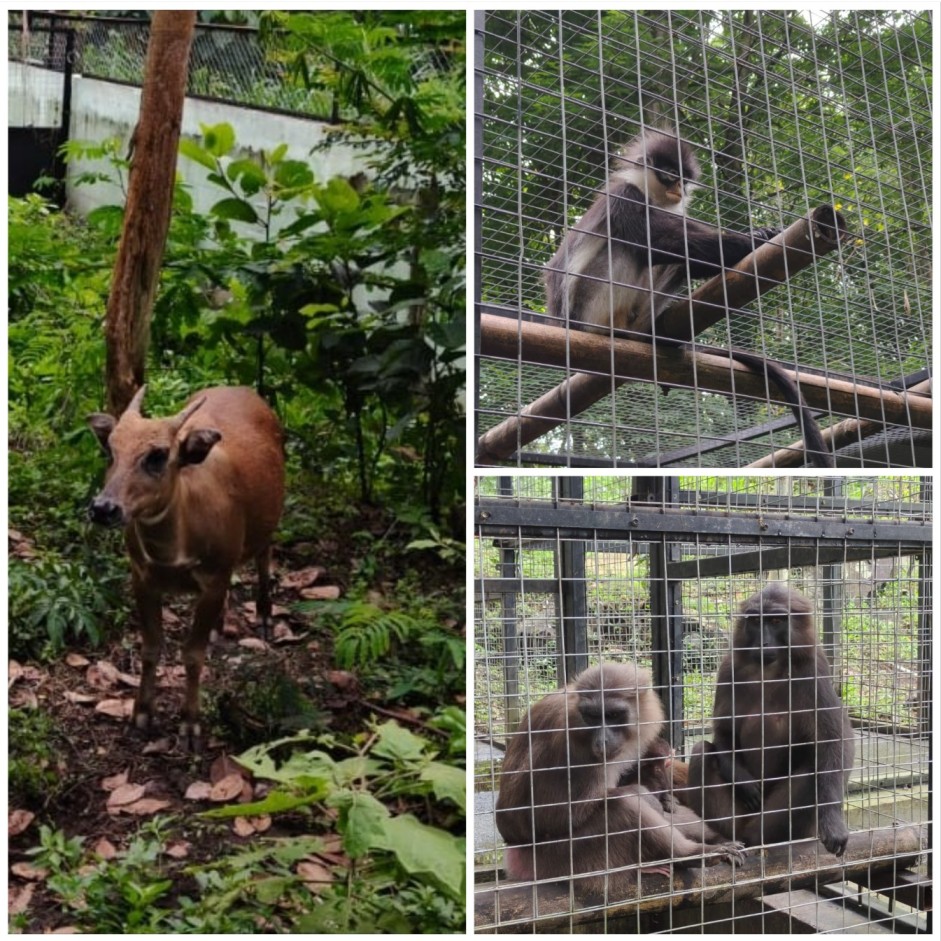
This photo collage showed a Buton anoa (left), Natuna Island surili (above right), and Celebes crested macaque (below right) at Prigen Conservation Breeding Ark's facility in in Prigen, Pasuruan district, East Java province, on Friday (December 19, 2025). (Indonesia Window)
Bagikan

Komentar
Berita Terkait

Stone carvings found inside cave of China's Longmen Grottoes
Indonesia
•
13 Apr 2024
New species of Paraphlomis found in south China
Indonesia
•
28 Jul 2024

Taiwan invents ‘Android’ for electric cars
Indonesia
•
24 Mar 2021

Hajj1442 – Artificial intelligence technology applied to support pilgrims
Indonesia
•
01 Jul 2021


Berita Terbaru

Feature – China pioneers AI-driven education as world seeks new schooling models
Indonesia
•
23 Aug 2026

China marks National Ecology Day with solid gains in green push
Indonesia
•
17 Aug 2026
Beijing ranks among global megacities with high biodiversity levels
Indonesia
•
25 May 2026

China increasingly significant in global biodiversity conservation, says British plant charity
Indonesia
•
25 May 2026