News Focus – Genetic loss makes Indonesia's endemic bull vulnerable to climate change

21 December 2025
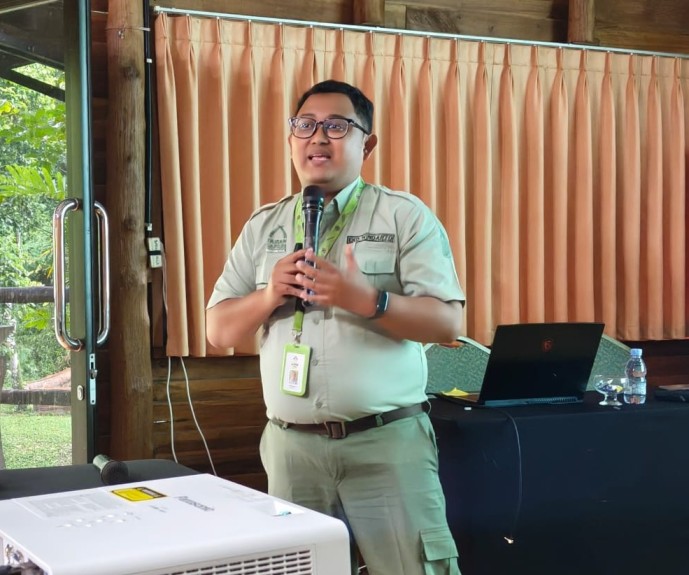
Eko Windarto, a mammal curator at the Prigen Conservation Breeding Ark (PCBA), made the remark during a media trip to PCBA (Prigen Conservation Breeding Ark) in Indonesia’s Pasuruan district, East Java province, on Thursday (December 18, 2025). (Indonesia Window)
The genetic diversity loss of the Javan bull makes it increasingly difficult for this Indonesian endemic mammal to adapt to climate change, habitat loss, and disease threats.
Pasuruan, East Java (Indonesia Window) — Threats to the survival of the Javan bull (Bos javanicus) are no longer limited to hunting and habitat loss. In the long term, declining genetic diversity is a crucial issue that could make it increasingly difficult for Indonesia's endemic bull to adapt to climate change, habitat loss, and disease threats.Eko Windarto, a mammal curator at the Prigen Conservation Breeding Ark (PCBA), made the remark during a media trip to PCBA (Prigen Conservation Breeding Ark) in Indonesia’s Pasuruan district, East Java province, on Thursday (Dec. 18)."One of the long-term threats to bull is losing genetic diversity. If the genetic diversity is limited, they would have difficulty adapting to environmental changes or facing disease," Eko pointed out.According to him, the bull population in conservation institutions (LK) currently faces serious limitations in obtaining fresh blood from the wild, and as a result, the choice of breeding stock is very limited."If a zoo only has one pair of bull, there's a high risk of inbreeding. This is different from an institution like Taman Safari Indonesia (the Indonesia Safari Park), which has several individuals, so breeding rotation is still possible," he explained.Eko said that the release of a bull into the wild should not be in a hurry. "We don't want their genetics to be poor when they're released. In the wild, they'll be more susceptible to disease, their bodies would shrink, and their population would weaken," he noted.Bulls in conservationCurrently, the ex-situ (outside their natural habitat) population of Javan bulls in Indonesia is recorded at 67 individuals, consisting of 23 males and 39 females, spread across seven conservation institutions.Birth data shows an increasing trend, although it has slowed down. In 2019, there were eight births, 2021 (3), 2022 (1), 2023 (3), and 2024 (5)."On the one hand, we want to increase the population, but on the other hand, we're concerned about mating due to the risk of inbreeding," Eko said.By the end of 2025, bull births had nearly reached the annual target of 10, with a total of nine births spread across Bogor Safari Park (West Java province), Prigen Park, Bali Safari Park, Ragunan Zoo (Jakarta), and Pananjung Nature Reserve in Pangandaran district, West Java province.Eko explained that to address genetic issues, bull conservation is being carried out cooperatively among conservation institutions, including the transfer of individuals.Six institutions are recommended to exchange female and male bulls to expand genetic variation. Two bulls, Dewa and Titus, are even scheduled to be transferred to Surabaya Zoo soon because the males there are no longer productive."Bulls can be productive at 15-16 years old, but in conservation institutions they can alive up to 26 years as most of them are F-0 (first generation) from the wild," he noted.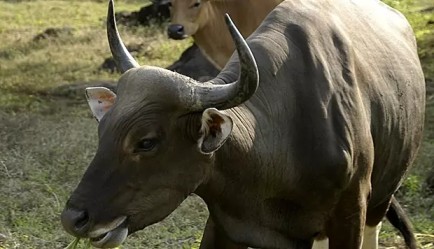
This undated photo shows a Javan bull at a conservation. (Taman Safari Indonesia)
Bagikan

Komentar
Berita Terkait
New species of Paraphlomis found in south China
Indonesia
•
28 Jul 2024

COVID-19 – Indonesia makes innovations for testing, tracing, treatment
Indonesia
•
13 Oct 2020

Scientists reveal patterns in Earth's rotational deceleration over millions of years
Indonesia
•
15 Aug 2024

Nuclear to identify cause of malnutrition
Indonesia
•
02 Nov 2019


Berita Terbaru
Beijing ranks among global megacities with high biodiversity levels
Indonesia
•
25 May 2026

China increasingly significant in global biodiversity conservation, says British plant charity
Indonesia
•
25 May 2026
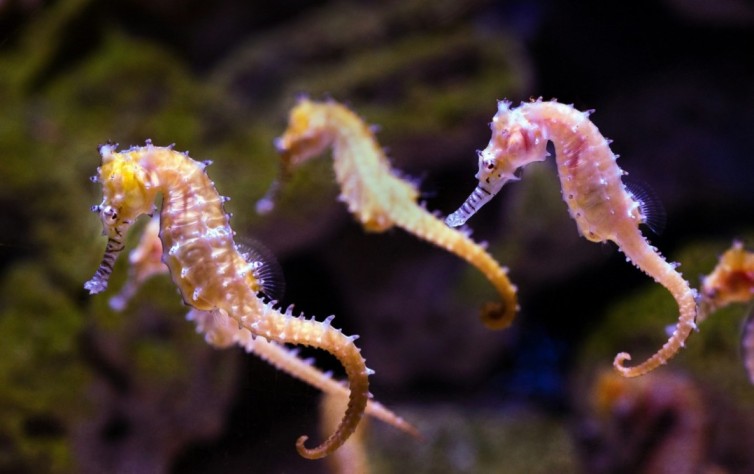
13 of world's seahorse species found in Indonesia, threatened by illegal trade, habitat destruction
Indonesia
•
19 May 2026

Feature – Humanoid robots shatter human record, showcase autonomy at Beijing half marathon
Indonesia
•
24 Apr 2026