Attenborough long-beaked echidna rediscovered in Indonesia’s Papua

14 November 2023
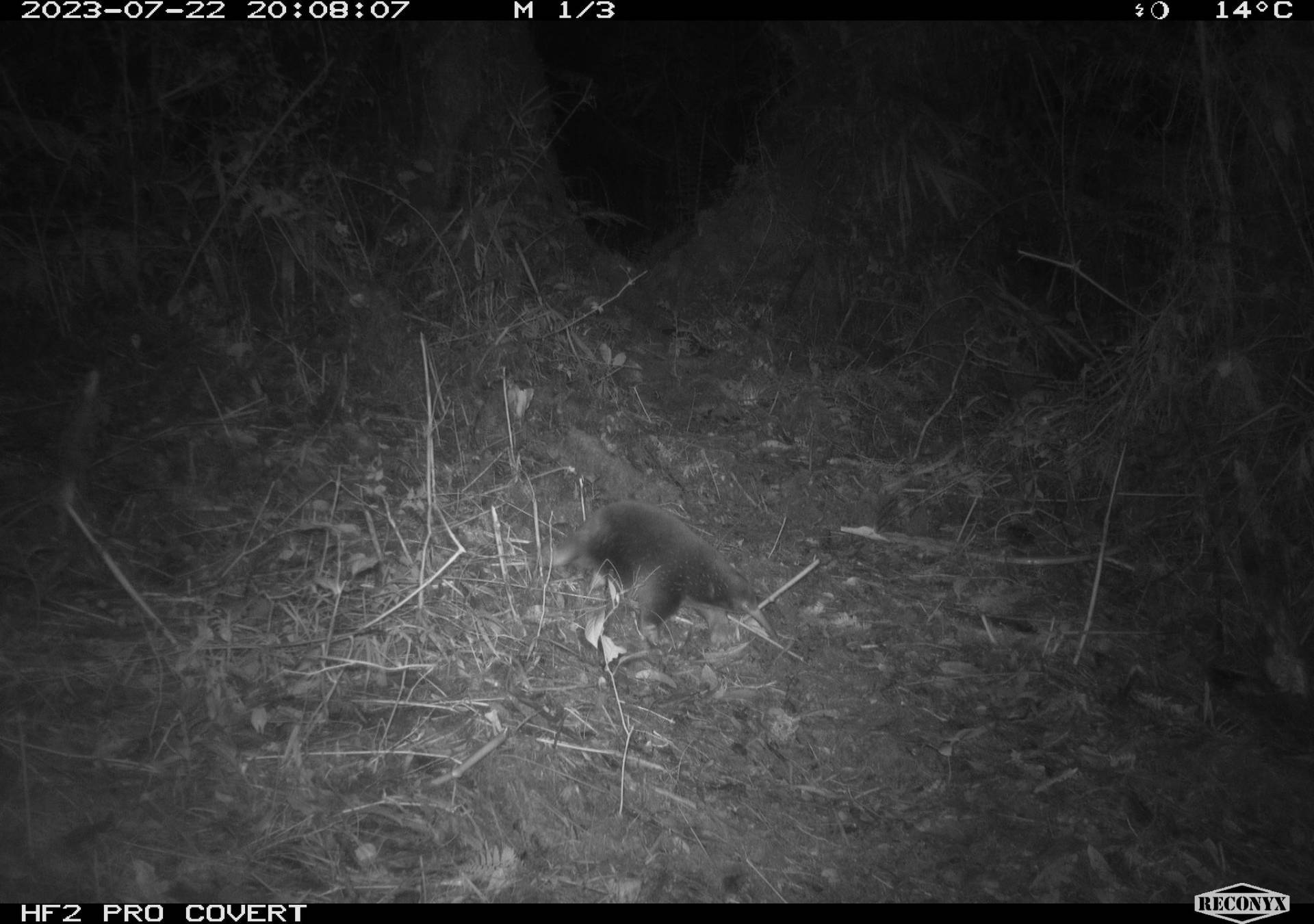
Attenborough long-beaked echidna (Zaglossus attenboroughi) has been recently caught on a video camera trap installed in the Cyclops Mountains, Papua province, Indonesia. (BRIN)
Attenborough long-beaked echidna is a monotreme mammal species which evolved from placental and marsupial mammals more than 200 million years ago.
Bogor, W Java (Indonesia Window) – After 62 years of being declared 'missing', Attenborough long-beaked echidna was rediscovered in the Cyclops Mountains of Papua, according to a press release from Indonesia’s National Research and Innovation Agency (BRIN) as quoted here on Tuesday.This mammal was rediscovered during a biodiversity training conducted by Indonesia’s National Research and Innovation Agency (BRIN), Papua’s Natural Resources Conservation Center under the Ministry of Environment and Forestry, Cenderawasih University, and Oxford University, in June and July 2023.Attenborough long-beaked echidna (Zaglossus attenboroughi) was caught on a video camera trap installed in the Cyclops Mountains.One of the researchers from Oxford University, James Kempton, stated that the validity of this discovery had been supported by the statements of two world's leading experts on Australasian mammals, Kris Helgen and Tim Flannery.The two experts agreed that the sighting of the mammal measuring 48-64 cm and weighing 4-9 kg caught on a camera trap was Attenborough long-beaked echidna (Zaglossus attenboroughi).The appearance of this endemic Papuan species was first identified by Pieter van Royen, a Dutch botanist on Mount Rara, Papua's Cyclops Mountains in 1961.A mammalian researcher from the Biosystematics and Evolution Research Center at the Biological and Environmental Research Organization, BRIN, Nurul Inayah, pointed out that Attenborough long-beaked echidna is a monotreme mammal species (a mammal that lays eggs). These animals evolved from placental and marsupial mammals more than 200 million years ago.To date, there are five species of monotremes in the world that are still alive, namely Duck-billed Platypus (Ornithorhyncus anatinus), short-beaked echidna (Tachyglossus aculeatus), eastern long-beaked echidna (Zaglossus bartoni), western long-beaked echidna (Zaglossus bruijnii), and Attenborough long-beaked echidna (Zaglossus attenboroughi).Monotreme species are unique among mammals as they have cloaca, have no nipples, and lay eggs.Although the morphological differences that define monotreme are known, many biological aspects remain unknown. This is because these nocturnal animals inhabit remote areas and live in burrows, especially for the long-beaked echidna.Amir Hamidy from the Scientific Authority on Biodiversity at BRIN, stated that according to the IUCN (The International Union for the Conservation of Nature) Red List, Attenborough long-beaked echidna is critically endangered.He added that based on the Minister of Environment and Forestry Regulation, only two species of monotreme mammals are included as protected species in Indonesia, namely Tachyglossus aculeatus and Zaglossus bruijni.The conservation status of Attenborough long-beaked echidna needs to be evaluated and it could be proposed as a protected species.Reporting by Indonesia WindowBagikan

Komentar
Berita Terkait

World’s death toll due to tuberculosis drops by 14 percent in 2015-2019: WHO
Indonesia
•
17 Oct 2020
Scientists discover new species mini frog in Indonesia's Sumatra
Indonesia
•
21 Jun 2020

Chinese scientists breed endangered fish species
Indonesia
•
09 May 2024

Indonesian researcher discovers new species of beetles in N Maluku
Indonesia
•
13 Feb 2020


Berita Terbaru
Beijing ranks among global megacities with high biodiversity levels
Indonesia
•
25 May 2026

China increasingly significant in global biodiversity conservation, says British plant charity
Indonesia
•
25 May 2026

13 of world's seahorse species found in Indonesia, threatened by illegal trade, habitat destruction
Indonesia
•
19 May 2026

Feature – Humanoid robots shatter human record, showcase autonomy at Beijing half marathon
Indonesia
•
24 Apr 2026