13 of world's seahorse species found in Indonesia, threatened by illegal trade, habitat destruction

19 May 2026
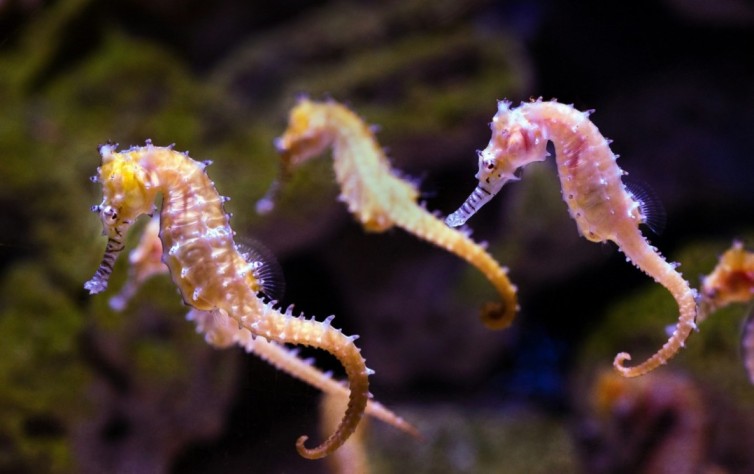
Illustration. (David Clode on Unsplash)
Seahorses are highly dependent on their habitat because they are not strong swimmers. These animals typically hook their tails onto seagrass, algae, or coral reefs to survive in the water.
Bogor, W Java (Indonesia Window) – Seahorses are a type of fish that live in shallow waters in temperate and tropical climates.
As the name suggests, all seahorses have horse-shaped heads. Their long bodies remain upright while swimming and end in curly tails that they use to grip other species, including marine plants.
So far, scientists have discovered around 50 different seahorse species. Of these, 13 inhabit Indonesian waters.
Masayu Rahmia Anwar Putri, a researcher at the Biota Systems Research Center of Indonesia’s National Research and Innovation Agency (BRIN), said that this number has the potential to increase as research progresses and new species are discovered.
She pointed out that several seahorse species in Indonesia are currently categorized as endangered based on global and national threat levels.
"Currently, some seahorses, especially those in Indonesia, are listed as critically endangered, endangered, and vulnerable," she said at a workshop titled ‘Coastal Community Perspectives in Supporting Seahorse Sustainability in Indonesian Fisheries’, held in Jakarta, on Monday (May 18).
Masayu explained that one of the main challenges in seahorse management is the lack of reporting data on utilization and trade. This makes it difficult to determine the status of seahorse populations in the wild.
She explained that international trade in seahorses must be accompanied by Non-Detriment Findings (NDF) documents to ensure that their utilization does not threaten wild populations. "If utilization and trade are not reported, we don't know the true condition of the population," she said.
Besides trade, another threat comes from the destruction of coastal habitats such as seagrass and macroalgae, which are the seahorses' habitats.
Masayu explained that seahorses are highly dependent on their habitat because they are not strong swimmers. These animals typically hook their tails onto seagrass, algae, or coral reefs to survive in the water.
"When their habitat is disturbed, they will be struggling to survive," she said, highlighting the high level of use of dried seahorses for traditional medicine and souvenirs.
According to her, the high economic value of seahorses continues to be exploited, with prices reaching between 1 million and 8 million rupiahs per kilogram.
*1 U.S. dollars = 17,708 rupiahs
In each kilogram, there are hundreds to thousands of seahorses, depending on the size of the species. "Imagine if a village took all the seahorses, we wouldn't find any more in that area," she said.
On that occasion, Masayu explained several unique facts about seahorses, one of which is that males carry and give birth to young, with eggs from the female transferred to a pouch by the male to be incubated for about one to two months until they are ready to be born.
"In that pouch, the embryos are supplied with oxygen and the salt content is regulated until they are ready to be born," she explained.
BRIN also collaborates with the Ministry of Maritime Affairs and Fisheries to provide quota recommendations for seahorse utilization for trade, research, and for breeding broodstock.
In addition, BRIN has developed translocation and restocking guidelines and supports the development of a national action plan for sustainable seahorse management.
Masayu emphasized that seahorse management cannot rely solely on the government. Due to the vastness of Indonesian waters and limited personnel, he encouraged coastal communities to actively report catches, protect habitats, and disseminate knowledge about the importance of seahorse conservation.
"If coastal communities aren't willing to contribute, we won't be able to obtain accurate data," she said.
It is hoped that public understanding of the uniqueness and ecology of seahorses would raise awareness about preserving the species' sustainability in the wild.
Reporting by Indonesia Window
Bagikan

Komentar
Berita Terkait
G20 committed to increasing global coral reef recovery by 10 percent
Indonesia
•
18 Nov 2020

Indonesian researchers develop magnesium-based bone implants without removal surgery
Indonesia
•
19 Nov 2025
China's breakthrough in treating hypertrophic heart disease garners global attention
Indonesia
•
31 Jul 2024
First evidence of microplastics found in Antarctic snow
Indonesia
•
09 Jun 2022


Berita Terbaru

SESERA offers everyday water purification solution for emergency situations
Indonesia
•
06 Oct 2026

Feature – China pioneers AI-driven education as world seeks new schooling models
Indonesia
•
23 Aug 2026

China marks National Ecology Day with solid gains in green push
Indonesia
•
17 Aug 2026
Beijing ranks among global megacities with high biodiversity levels
Indonesia
•
25 May 2026