News Focus – Lifestyle in halal industry favored by Muslims and non-Muslims

12 September 2024

Sapta Nirwandar, chairman of the Indonesia Halal Lifestyle Center. (Photo: Special)
The halal industry consists of Islamic finance, pharmacy, food, cosmetics, modest fashion, media and recreation and halal tourism. So the halal tourism is part of the seven sectors in the halal industry related to Islamic practices.
Jakarta (Indonesia Window) – The halal lifestyle is actually very relevant to everyone and this makes many non-Muslim consumers who end up choosing to practice a halal lifestyle and use products from the halal industry that are guaranteed to be safe, clean, and good."The halal industrial sector is now the focus of many Muslim and non-Muslim countries to strengthen their economies after the global pandemic," Chairman of the Indonesia Halal Lifestyle Center (IHLC), Sapta Nirwandar, said.Sapta spoke during the recent Halal Tourism Talk in front of the journalist community consisting of those of the Association of Indonesia Muslim Journalists (locally known as its abbreviation PJMI) and the Halal Tourism Dialogue Forum (FDP Halal).Meanwhile, Minister of Tourism and Creative Economy Sandiaga Uno sent a tapping video to welcome the activity initiated by a halal tourism observer, Hilda Ansariah Sabri.Ismail Lutan, Chairman of PJMI, said that together with administrators in a number of regions, his party continues to improve its quality and productivity to awaken Islam as a world power. Until now, PJMI has been set up in Greater Jakarta (Indonesia’s capital city), the country’s cities of Pekanbaru (Riau province), Manado (North Sulawesi province), Surabaya (East Java province), Bandung (West Java province), and Cilegon (Banten province).In terms of halal industry, the cosmetics sector alone can have derivatives of up to 65 product items, Sapta noted, adding that explaining halal in this industry can be long because the 65 product items are only from one cosmetic sector that women use for treatment and all that the world market needs today are halal certified.Seven sectors in the halal industryThe halal industry consists of Islamic finance, pharmacy, food, cosmetics, modest fashion, media and recreation, and halal tourism. The halal tourism is part of the seven sectors in the halal industry related to Islamic practices known as halal compliance, he added.Non-Muslim countries, especially after COVID-19, are actively attracting Muslim tourists in the world whose population reaches 2. 2 billion or the market from non-Muslims by creating this large market need. In the halal tourism sector or halal tourism, Muslim Friendly Tourism packages are popular."Non-Muslim countries are actually the largest suppliers of food & beverage needs or halal food and beverages for Muslims such as beef and chicken. In the halal tourism sector, Japan, Thailand, and Taiwan have actually succeeded in selling halal tour packages," he said.According to him, Indonesia does not participate in marketing halal tour packages as Muslim Friendly Tourism because the definition refers to the provision of facilities and services that are tailored to meet the needs of Muslim tourists, but do not fully follow halal guidelines in accordance with Islamic religious principles.Muslim Friendly's main goal is to create a more welcoming and comfortable environment for Muslim tourists without ensuring that all aspects are completely halal. Indeed, facilities such as services of halal food, places of worship, and information about the direction of the Qibla are usually provided.However, these places may also offer non-halal options or do not separate halal and non-halal food in their presentation for tourism.A restaurant may provide halal food but also sell alcohol, or a hotel may not fully comply with sharia standards in its operations. "Ironically, Indonesia with the largest Muslim population in the world has not made halal as a brand and tourism actors and the government often use the term their products as Muslim Friendly Destinations, Chairperson of the Halal Tourism Dialogue Forum (FDP) ," Hilda said.Indonesia only needs to follow the Halal Tourism Services (HTS) from the Standards and Metrology Institute for Islamic Countries (SMIIC) issued by the Organization of Islamic Cooperation (OIC) Definition of Halal Tourism.The definition of halal tourism, more focused on providing all aspects of travel that are fully compliant with Islamic law, includes food, accommodation, and activities that must all comply with halal standards. All elements of travel must be free from those that are prohibited according to Islamic law, Hilda added.In Halal Tourism, all facilities and services, from food to accommodation and activities, are arranged to fully meet halal standards. This includes food that is prepared and served with Sharia compliant methods.Answering the participants' questions about what label halal tourism products should use, Sapta explained that it is time for the regional administrations and tourism actors to unite in using halal tourism product labels and follow SMIIC standards from the OIC."As Indonesia is a member country of the OIC, we pioneered the standardization of HTS precisely during the OIC conference in Jakarta in 2014 when I was still the Deputy Minister of the Ministry of Tourism and Creative Economy, as my superiors at the Ministry of Tourism and Creative Economy such as I Gede Ardika, Jero Wacik, Mari Pangestu are non-Muslims," Sapta pointed out.Reporting by Indonesia WindowBagikan

Komentar
Berita Terkait
Indonesia's share of Internet of Things 444 trillion rupiah by 2022
Indonesia
•
22 Sep 2020
Global brands view China as indispensable market to expand business
Indonesia
•
17 Apr 2026
World Bank says Indonesia's financial sector still vulnerable to global risks
Indonesia
•
22 Jun 2022
Trade balance surplus of Indonesia in September continues
Indonesia
•
18 Oct 2022

Berita Terbaru
Opinion – An Asia-Pacific Community: Our shared choice for regional prosperity
Indonesia
•
09 Sep 2026
China's EV charging infrastructure expands rapidly in first seven months
Indonesia
•
26 Aug 2026
China-Ecuador ties get a boost as Xi Jinping pushes Belt and road, AI Cooperation
Indonesia
•
19 Aug 2026
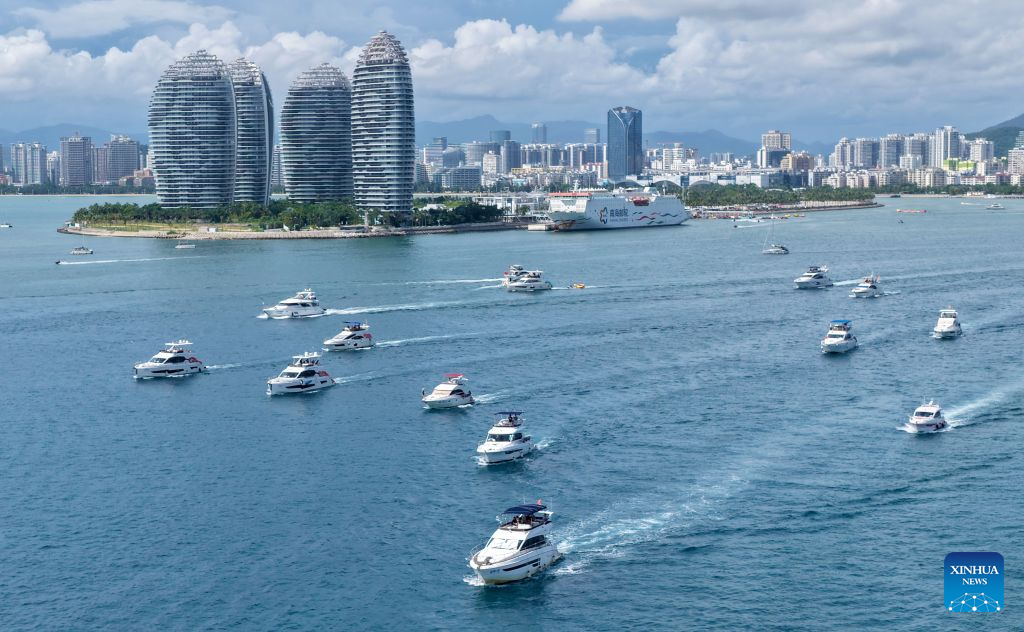
Hainan steps up efforts to build world-class tourism, consumption destination
Indonesia
•
16 Aug 2026