Indonesia has 6.3 mln hectares of black soil, but threatened

17 December 2024
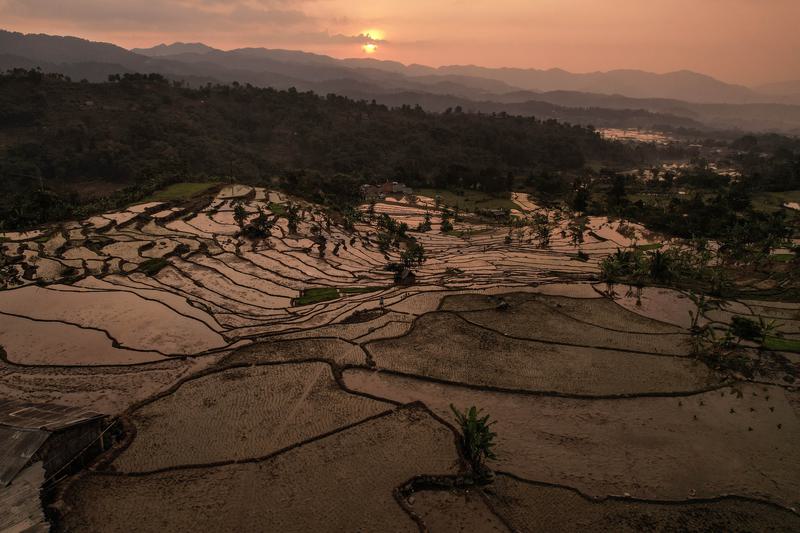
An aerial photo taken by a drone on Sept. 19, 2024 shows a view of rice fields in Ciasihan Village, Bogor District. (Xinhua/Veri Sanovri)
The first phase of black soil mapping in Indonesia finds 6.3 million hectares, spreading across 14 provinces, mainly managed for agriculture and plantations.
Bogor, W Java (Indonesia Window) – Thhe National Research and Innovation Agency (BRIN) has conducted the first phase of black soil mapping in Indonesia, and found 6.3 million hectares in 14 provinces.The organic-rich soil was found in Aceh Province, several areas on Java Island, Sulawesi, as well as in North Maluku, West Nusa Tenggara (NTB), East Nusa Tenggara (NTT), and Papua.“If land conversion is carried out without valid data, erosion will occur, and land cultivation will not be intensive. Black soil will be lost, as will its carbon stock. Therefore, identification of spatial distribution and protection of black soil is very necessary,” a researcher from BRINS’ Food Crops Research Center, Destika Cahyana, said in a webinar on 'Sustainable Black Soil Management for Food Security and Climate Change Mitigation, Thursday (Dec. 12).Destika explained that BRIN is currently preparing the second stage of black soil mapping."Meanwhile, for the second stage, we are currently classifying the SAGA software with DEM data and the Landform algorithm. Then the separation of Mollisols is carried out in the R software using the digital soil mapping method or learning machine," he explained.Furthermore, another BRIN’s researcher, Ahmad Suriadi, explained that black soil in NTB is managed for agricultural, plantation, forestry, and livestock activities. "Management is carried out using the gogorancah system for dry land and gora planting, so that farmers do not need to weed the land when it is dry," he pointed out.Gogorancah is planting rice in the rainy season, using a combination of the gogo system and the rice paddy system. The system requires the planting should be conducted as early as possible, the soil must be loose, at the beginning of growth the water does not stagnate, the soil must be free from grass, a lot of manure/green manure, and artificial fertilizers.He also suggested the use of herbicides to reduce distillation costs, as well as implementing air conservation techniques with reservoirs to increase the productivity of rain-fed land.Meanwhile, another researcher, Tony Basuki, explained the management of black soil in NTT which is spread across small islands. "We manage the land with a knowledge-based approach and local wisdom, such as the aisuak technique to cultivate heavy soil. This technique helps loosen the soil after rain," he said.In the Palu Valley of Central Sulawesi province, a researcher, Syafruddin, explained that black soil is used for horticulture, cocoa, coffee, and secondary crops plantations."The management of black soil here requires fertilization, soil and air conservation techniques. In addition, infrastructure support and counseling for farmers are also needed," he added.He called on the locals to care for black soil and encourage further research in order to increase productivity and support national food self-sufficiency.Reporting by Indonesia WindowBagikan

Komentar
Berita Terkait

Indonesia’s mahakam dolphins driven away from natural habitats
Indonesia
•
26 Jul 2020

Indonesia applies distance learning on nuclear technology development
Indonesia
•
25 Sep 2019

Internet of Things key for precision agriculture
Indonesia
•
17 Sep 2020

The world recognizes the progress of Indonesia's nuclear technology
Indonesia
•
25 Sep 2019


Berita Terbaru

Feature – China pioneers AI-driven education as world seeks new schooling models
Indonesia
•
23 Aug 2026

China marks National Ecology Day with solid gains in green push
Indonesia
•
17 Aug 2026
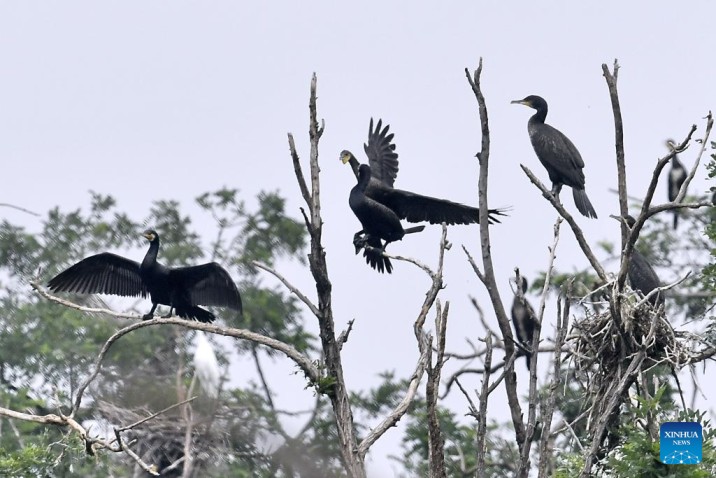
Beijing ranks among global megacities with high biodiversity levels
Indonesia
•
25 May 2026
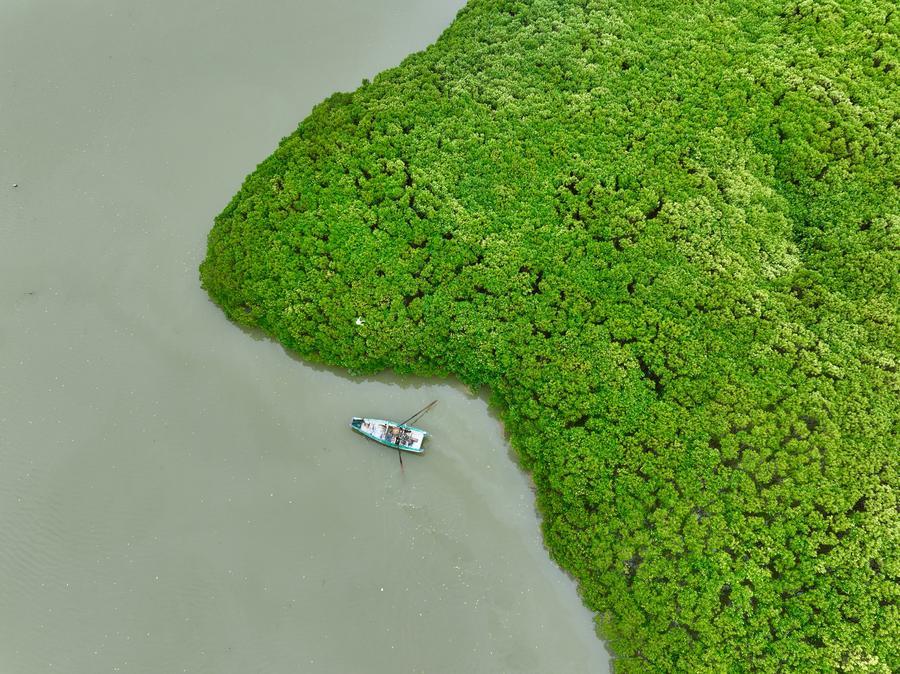
China increasingly significant in global biodiversity conservation, says British plant charity
Indonesia
•
25 May 2026